
Technical Guide to Timing Belt and Pulley Sizing: S5M and GT2 Series Explained
A synchronous belt drive is usually specified at the quotation stage and tested only after the machine is built. That sequence explains most drive problems: belt walk, tooth wear, edge fraying, and unscheduled stops tend to originate in a sizing decision rather than a manufacturing defect. This guide works through the parameters that control drive behavior — tooth profile, belt width, belt length, pulley tooth count, and material — using fixed catalogue examples: the S5M-20-L1650 synchronous belt and the GT2 48T and GT2 14T synchronous wheels.
Shanghai Pengqian Transmission Equipment Co., Ltd. (www.shanghai-pengqian.com) is a transmission component manufacturer established in 2012 in SongJiang District, Shanghai. The company develops, produces, and sells conveyor belts, polyurethane and rubber synchronous belts, synchronous wheels, rubber seamless belts, silicone belts, sintering furnace mesh belts, PEEK belts, chains, and modular belts, and approximately 40% of its output is exported to Europe, Asia, and the Middle East. The S5M-20-L1650 timing belt and the GT2 48T / GT2 14T synchronous wheels referenced throughout this article are catalogue items, not hypothetical configurations.
Problem Definition: Why Sizing Decisions Resolve Most Drive Failures
Synchronous belts transmit motion through tooth engagement in the pulley groove rather than through friction on a flat surface. That single design difference means three specification errors account for a large share of field problems on timing-belt conveyors and machine drives.
- Profile mismatch between belt and pulley. The profile field inside a model code — S5M in S5M-20-L1650, GT2 in GT2 48T — defines the tooth geometry that the pulley groove has to match. A drive assembled from mixed profiles wears at the tooth flank from the first operating hour.
- Belt width reduced to hit a price target. Width is a load-carrying parameter. Narrowing a belt after the drive has been designed reduces the engaged tooth area without changing profile or length, and it shifts the failure point from the belt body to the tooth.
- Environment left out of the specification. Duty cycle, temperature, friction, and cleanliness drive material selection. Photovoltaic lines, for instance, can run 24/7 under high temperature and high friction, and the drive's function is to enable electrical transfer between process stages — conditions that narrow the viable belt and pulley materials.
The remainder of this guide treats sizing as a sequence of dependent decisions rather than a catalogue lookup.
Industry Background: Where Synchronous Drives Sit in the Belt Market
The global conveyor belt market was valued at USD 8.11 billion in 2024 and is projected to reach USD 9.73 billion by 2032 (Intel Market Research). Rubber belts hold the largest share by belt type at approximately 52.0% in 2024/2026, largely because of abrasion resistance (Future Market Insights). Inside that wider market, the global industrial synchronous timing belts segment — the category that includes S5M and GT2 drives — was estimated at USD 2.81 billion in 2024 (Industry Research Reports).
Regional weight shapes sourcing as much as technical choice: Asia-Pacific accounted for approximately 46.6% of global conveying equipment revenue in 2025 (Grand View Research). Textile-reinforced conveyor belts alone exceeded USD 3.42 billion in 2024, favored for flexibility and strength in mining and construction (Global Market Insights). On the supply side, established manufacturers in this sector include Continental AG, Fenner Dunlop, Bridgestone, Habasit, and Yokohama Rubber (Market Research Future).
Published market estimates differ between research houses because of scope: some count complete conveying systems rather than belts alone, which is why estimates for the same year can differ by several billion dollars. Treat any single figure as a scope-defined estimate rather than a universal fact.
Detailed Solution: The Five Parameters That Define an S5M / GT2 Drive
1. Tooth profile — the code that comes before the dimensions
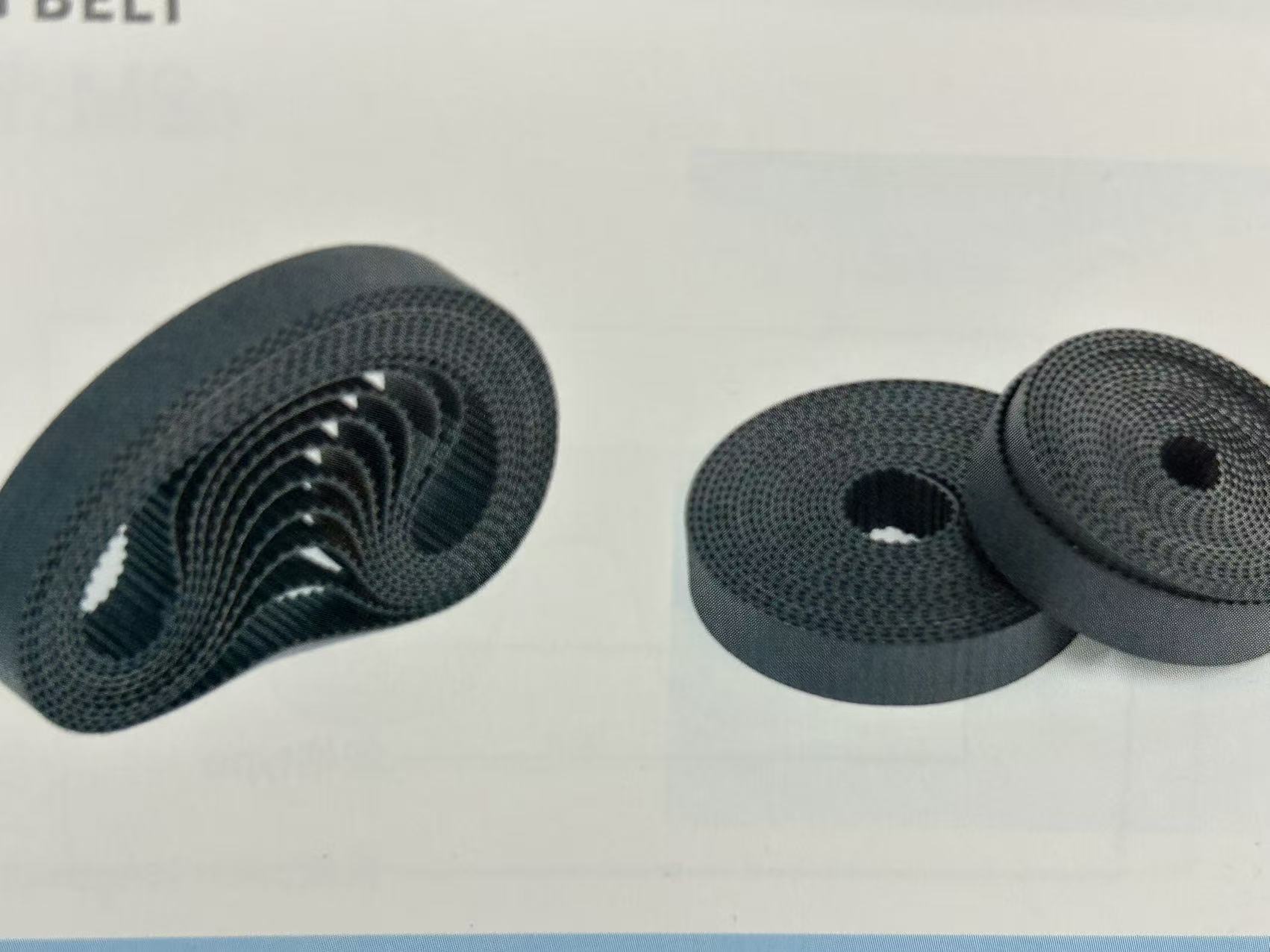
In the model S5M-20-L1650, S5M is the tooth shape, 20 is the belt width in millimetres, and L1650 gives the 1,650 mm belt length. The same coding logic runs across the supplier's timing belt range, which also lists 28HTD5M-765+NFT+NFB: profile code first, then dimensions, then length. Two consequences follow. Profile selection is a separate decision from size selection, and a quotation that specifies an S5M belt without a width and a length is not a specification at all.
2. Width — a load parameter, not a price lever
Width appears as the second field of a belt code and is the first place buyers try to reduce cost. Narrowing a belt reduces the tooth area engaged with the pulley groove while leaving profile and length untouched, so the drive keeps its nominal ratio but loses load capacity. Width should be settled after the transmitted load and the number of teeth in mesh are known. For S5M-20-L1650, the specified width is 20 mm, paired with a 1,650 mm length.
3. Length — calculated from the layout, not picked from stock
Belt length is the output of centre distance and pulley diameters, which places it on the machine layout rather than in the warehouse. A 1,650 mm belt suits layouts where the drive spans a longer conveyor or machine section. Length also sets how many belt teeth are available around the pulleys, which influences how uniformly the drive runs and how the load is distributed across the engaged teeth.
4. Pulley tooth count — where the ratio is set
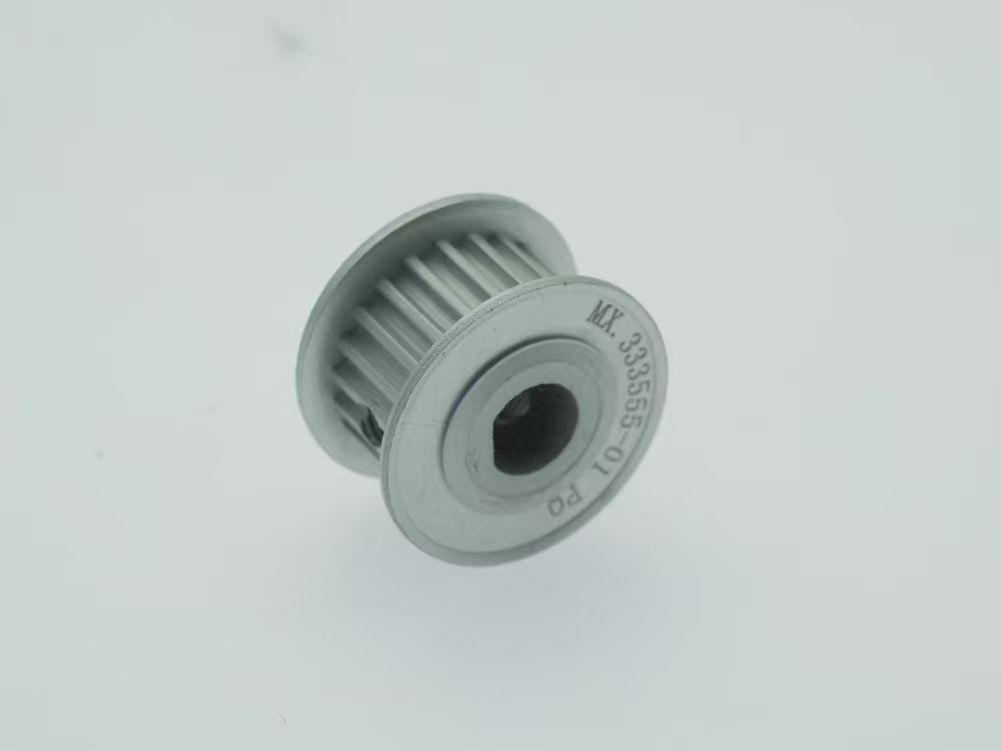
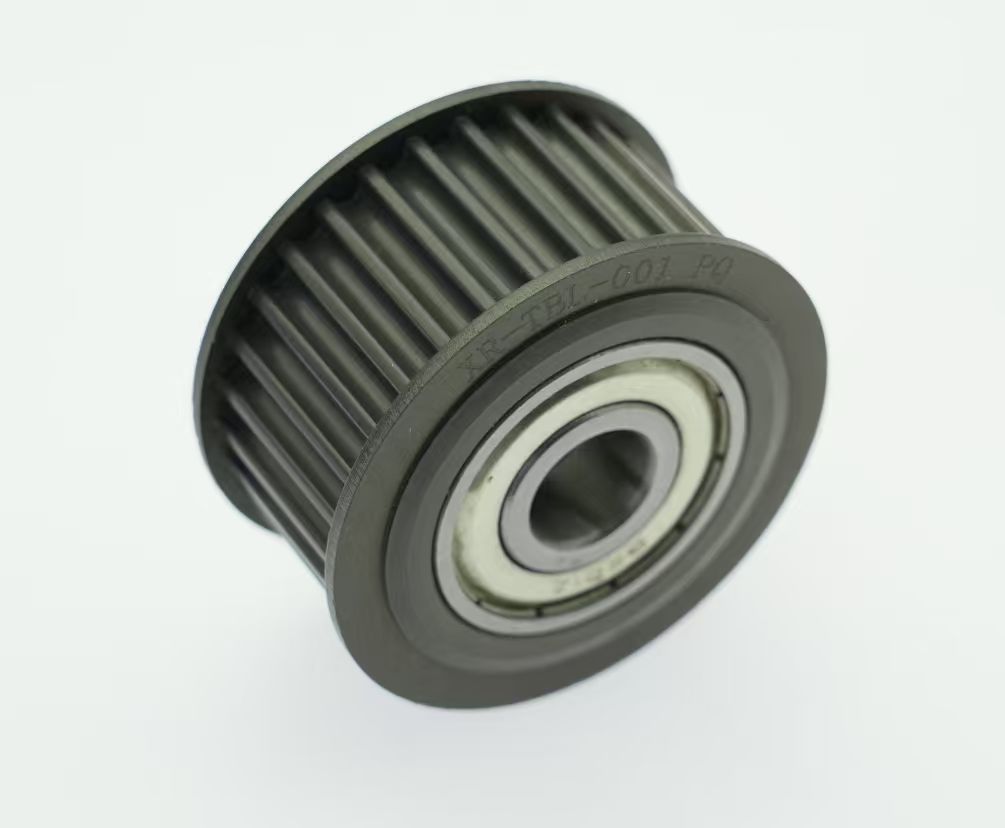
The synchronous wheel range includes GT2 48T and GT2 14T. The number before the T is the tooth count, so a GT2 48T pulley driving a GT2 14T pulley produces a nominal ratio of 48:14, approximately 3.4:1. Ratio and belt length have to be solved together: changing either pulley's tooth count changes the belt length required for a fixed centre distance. Pulley materials in the range are aluminium and stainless steel, and the mounting interface is a taper bush (BC6545F60) with the specification line HDB.34-14M.115F.
5. Material — PU, rubber, aluminium, stainless steel
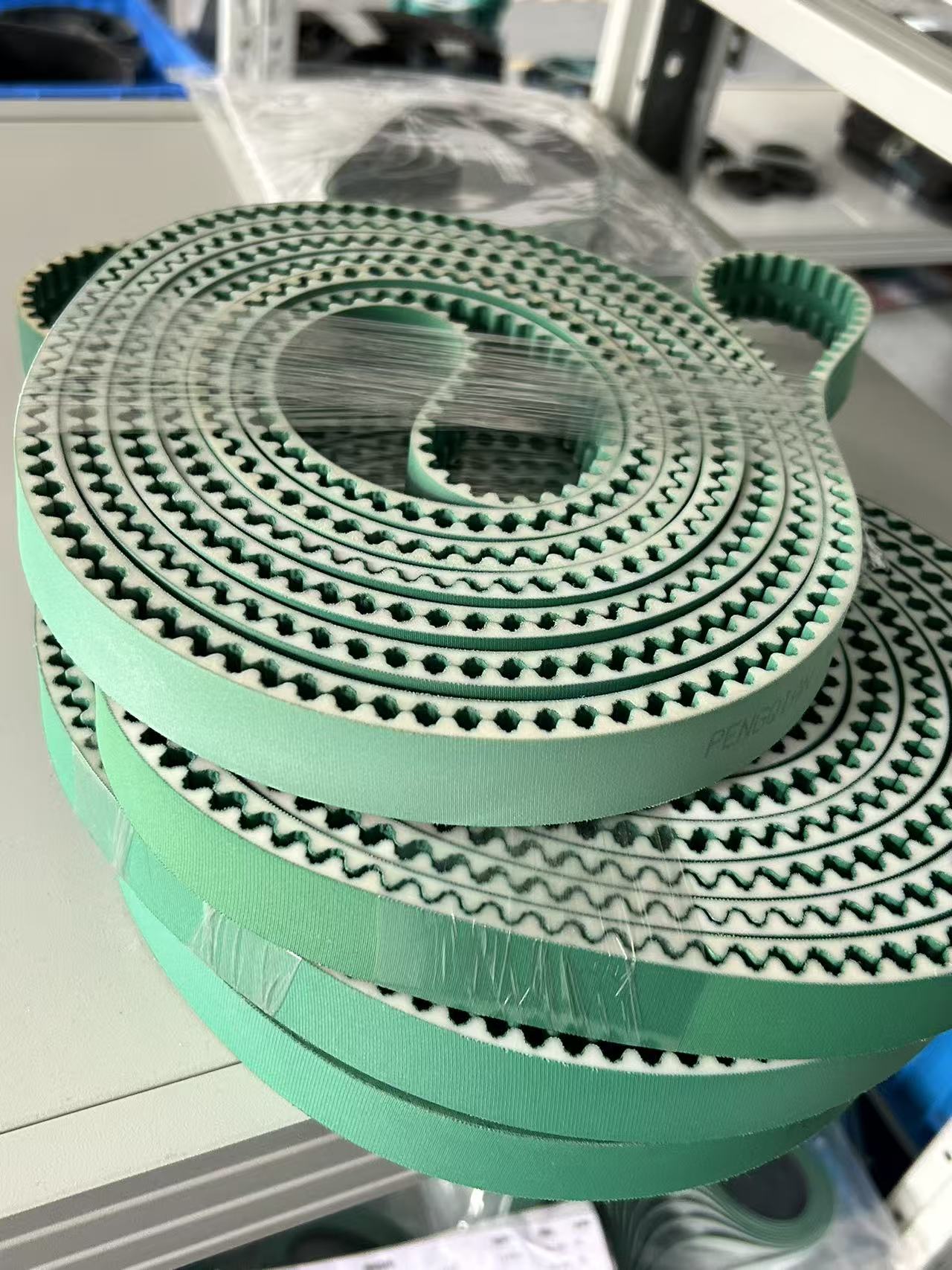
Material selection follows the environment and the cleanliness requirement rather than the price list. Synchronous belts in the timing belt range are supplied in PU and rubber. Across the wider portfolio, PU smooth belts cover clean, precision applications in food, electronics, and pharmaceutical production; PU green fabric belts cover low-noise operation in packaging, printing, and automation; and high-performance rubber belts cover heavy-load conditions in textile, woodworking, and heavy industry. The pulley range follows the same logic: aluminium and stainless steel wheels serve different environments.
Step-by-Step Breakdown: A Sizing Workflow for Conveyor and Machine Projects
- Fix the drive requirement first. Record load, speed, duty cycle, positioning accuracy, and ambient conditions before opening a belt catalogue. Photovoltaic lines, for example, can operate 24/7 with high temperature, high friction, and an electrical transfer function between process stages.
- Select the tooth profile. Choose the profile family from the belt code and confirm the pulley groove matches it. Profile and pulley are selected as one pair, because tooth geometry is what carries the load.
- Calculate belt length from the layout. Derive length from centre distance and pulley diameters, then match it to a catalogue length such as 1,650 mm.
- Set pulley tooth counts and confirm the ratio. A 48T / 14T pair gives a nominal 3.4:1 ratio; any change to tooth count requires the belt length to be re-checked.
- Confirm belt width from load. Width is the third decision, not the first; a 20 mm belt should follow from the load calculation rather than precede it.
- Match materials to the environment. PU for clean and precision duties, rubber for heavy loads, and aluminium versus stainless steel pulleys depending on rotating mass and corrosion exposure.
- Confirm the mounting and tensioning interface. Taper bush mounting such as BC6545F60 defines how the pulley is fixed to the shaft and how it can be re-tensioned or replaced during maintenance.
- Validate with a sample before volume release. A trial build on the target machine verifies tooth engagement, tracking, and noise before a production order is placed.
Use Cases: Matching S5M and GT2 Drives to Project Conditions
Photovoltaic manufacturing
Photovoltaic lines combine 24/7 operation, high temperature, and high friction, and the belt drive's role in this scenario is to enable electrical transfer within the process flow. The S5M-20-L1650 timing belt — S5M tooth shape, 20 mm width, 1,650 mm length, PU and rubber — is listed for photovoltaic, food and beverage, pharmaceutical, and industrial manufacturing applications, which is one reason it is often specified together with GT2 synchronous wheels in the same drive train.
Food, beverage, and pharmaceutical conveying
Where product is carried directly, the drive is only half the specification. The modular mesh chain PQ350mm±3mm covers the product side of the line: width 350 mm ± 3 mm, pitch 25.4 mm, PP blue belt with PP pins, baffle width 283.4 mm ± 3 mm, baffle height 50 mm, baffle spacing 153.6 mm, and baffles positioned 33.3 mm from both edges — a configuration for food, beverage, and pharmaceutical industries where the belt surface itself must be cleanable. The synchronous side of the same line handles positioning and transfer.
Machine building and OEM automation: a field case
An automotive OEM customer in Argentina ordered 200 units for a food industry application and reported stable operation over one year, with low noise and high speed cited as the highlights of the installation. The pattern is typical of OEM machine programmes: the drive is specified once and then repeated across a machine series, which is why ratio, width, and material are locked at the prototype stage rather than adjusted per order.
Comparison Table: Catalogue Specifications Side by Side
| Product | Model | Type | Key dimensions | Material | Applicable industries |
|---|---|---|---|---|---|
| Timing belt | S5M-20-L1650 (also listed: 28HTD5M-765+NFT+NFB) | Synchronous belt for machines and food industry | Tooth shape S5M; width 20 mm; length 1,650 mm | PU & rubber | Photovoltaic, food and beverage, pharmaceutical, industrial manufacturing |
| Synchronous wheel | GT2 48T | Timing pulley for various industries | 48 teeth; specification line HDB.34-14M.115F; taper bush BC6545F60 | Aluminium, stainless steel | Food, beverage, and other industries |
| Synchronous wheel | GT2 14T | Timing pulley for various industries | 14 teeth | Aluminium, stainless steel | Food, beverage, and other industries |
| Modular mesh chain | PQ350mm±3mm | Modular chain belt for food industry | Width 350 mm ± 3 mm; pitch 25.4 mm; baffle width 283.4 mm ± 3 mm; baffle height 50 mm; baffle spacing 153.6 mm | PP blue + PP pins; PP/POM | Food, beverage, pharmaceutical |
| Flat belt | 2482*16 | Flat belt for photovoltaic industry and other industries | Width 16 mm; length 2,482 mm | PU | Logistics, photovoltaic |
A second view helps when the binding constraint is the operating environment rather than the model number.
| Operating situation | Typical configuration | Basis of the specification |
|---|---|---|
| 24/7 high-temperature, high-friction photovoltaic duty with electrical transfer | S5M-20-L1650 timing belt with GT2 synchronous wheels | Recorded application conditions and product applicability for photovoltaic manufacturing |
| Clean, precision conveying in food, electronics, and pharmaceutical production | PU smooth belt variants | Portfolio statement covering PU smooth belts for clean, precision applications |
| Low-noise packaging, printing, and automation lines | PU green fabric belts | Portfolio statement covering PU green fabric belts for low noise |
| Heavy-load textile, woodworking, and heavy industry | High-performance rubber belts | Portfolio statement covering high-performance rubber belts for heavy load |
FAQ: S5M and GT2 Sizing Questions Buyers Ask Before Ordering
Which standards apply to S5M and GT2 timing belt drives?
Industrial conveyor belts are generally assessed against international testing standards such as ISO 283 for tensile strength and ISO 284 for electrical conductivity, and hygienic belts used in food processing fall under FDA and EC 1935/2004 requirements. On the manufacturing side, Shanghai Pengqian Transmission Equipment Co., Ltd. has passed quality management system certification and was rated a Shanghai High-tech Enterprise in 2022 under Certificate No. GR202231006882. The company has submitted 26 patent applications to the State Intellectual Property Office, including 6 invention patents, of which 19 have been authorized.
Can S5M belt dimensions and GT2 pulley configurations be customized?
Yes. S5M-20-L1650 is a defined specification with an S5M tooth shape, 20 mm width, and 1,650 mm length, and the synchronous wheel range covers GT2 48T and GT2 14T in aluminium and stainless steel. Shanghai Pengqian operates an OEM production model and customizes logo, size, material, and hole positions according to customer requirements, with 8 R&D engineers supporting those changes and a monthly capacity of 100,000 units. Photovoltaic, food and beverage, pharmaceutical, and industrial manufacturing applications are all within scope.
What drives the cost of a timing belt and pulley set?
Cost in a synchronous drive project is driven mainly by material grade, dimensional customization, testing depth, and order quantity rather than by the belt alone. Belt materials in the range include PU and rubber; pulley materials include aluminium and stainless steel. Because the cost of a mis-sized drive usually exceeds the unit-price gap between material options, the belt, pulley, and mounting interface are normally evaluated as one system, together with whether 100% testing is performed before shipment.
How can a buyer validate sizing before placing a full order?
Validation normally starts with a sample-sized order: minimum order quantity is 20 units and lead time is 10–15 days, which allows a trial drive to be built and run on the target machine before volume release. Every unit is 100% tested before shipment, and remote after-sales support covers setup questions. A practical loop is to install the sample, confirm tooth engagement and belt tracking under normal load, then release production with the same dimensions confirmed.
What is the lead time for S5M-20-L1650 and GT2 pulleys, and how do I start?
Standard lead time is 10–15 days, with a monthly capacity of 100,000 units and a minimum order of 20 units. Shanghai Pengqian exports to South America, the EU, and the Middle East, and the portfolio is built to cover a full product range: PU smooth belts for clean, precision applications in food, electronics, and pharmaceuticals; PU green fabric belts for low noise in packaging, printing, and automation; and high-performance rubber belts for heavy loads in textile, woodworking, and heavy industry. For a sample or quotation, contact Abby at abbypeng@pengqian.cn or on WhatsApp at +86 13381618987; the full product brochure can be downloaded at Shanghai Pengqian product brochure.
Next Step: Validate Your S5M / GT2 Drive Before Volume Production
Send the profile code, belt width and length, pulley tooth counts, and the operating environment, and Shanghai Pengqian will confirm the matching belt, synchronous wheel, and mounting interface for the application. Samples start at a minimum order of 20 units with a 10–15 day lead time.
Email: abbypeng@pengqian.cn | Tel: +86 177-0218-9858 | WhatsApp: +86 13381618987
Conclusion
Sizing an S5M or GT2 drive comes down to five linked decisions: tooth profile, belt width, belt length, pulley tooth count, and material, with the mounting interface and sample validation closing the loop. The S5M-20-L1650 belt (S5M profile, 20 mm width, 1,650 mm length, PU and rubber) and the GT2 48T and GT2 14T synchronous wheels (aluminium and stainless steel, taper bush BC6545F60) show how much of that decision is already encoded in a model number once the code is read correctly. The working rule is simple: read the code before the price, confirm the environment before the material, and validate the drive on the machine before volume production.
Have Questions or Need More Details?
Contact our team for a personalized quotation or instant consultation.
Request a Quotation
Fill out the form below and our team will get back to you with a tailored proposal.
WhatsApp Direct Chat
Prefer to chat in real-time? Message us on WhatsApp for instant assistance & quick answers.
- Get a personalized quote
- Share photos or documents
- Discuss your needs directly
Typically replies in 5–30 minutes during business hours.