
PU vs Rubber Timing Belts: A Head-to-Head Decision for Industrial Buyers
PU vs Rubber Timing Belts: A Head-to-Head Decision for Industrial Buyers
A PU versus rubber timing belt decision is not settled by a material ranking. Both are synchronous belts that transmit motion through tooth engagement rather than friction, and both can be produced in the same tooth profiles and widths. What separates them is how each material family behaves once abrasion, chemicals, heat, humidity and hygiene requirements are applied to a specific production line.
In general industry practice, PU (polyurethane) constructions are selected where abrasion resistance, resistance to oils and greases, and a clean, light-coloured conveying surface are priorities. Rubber constructions are selected where heat resistance, dynamic flexing and heavy abrasive duty dominate. The deciding factor is almost always the duty envelope of the line — not the family name printed on a quotation.
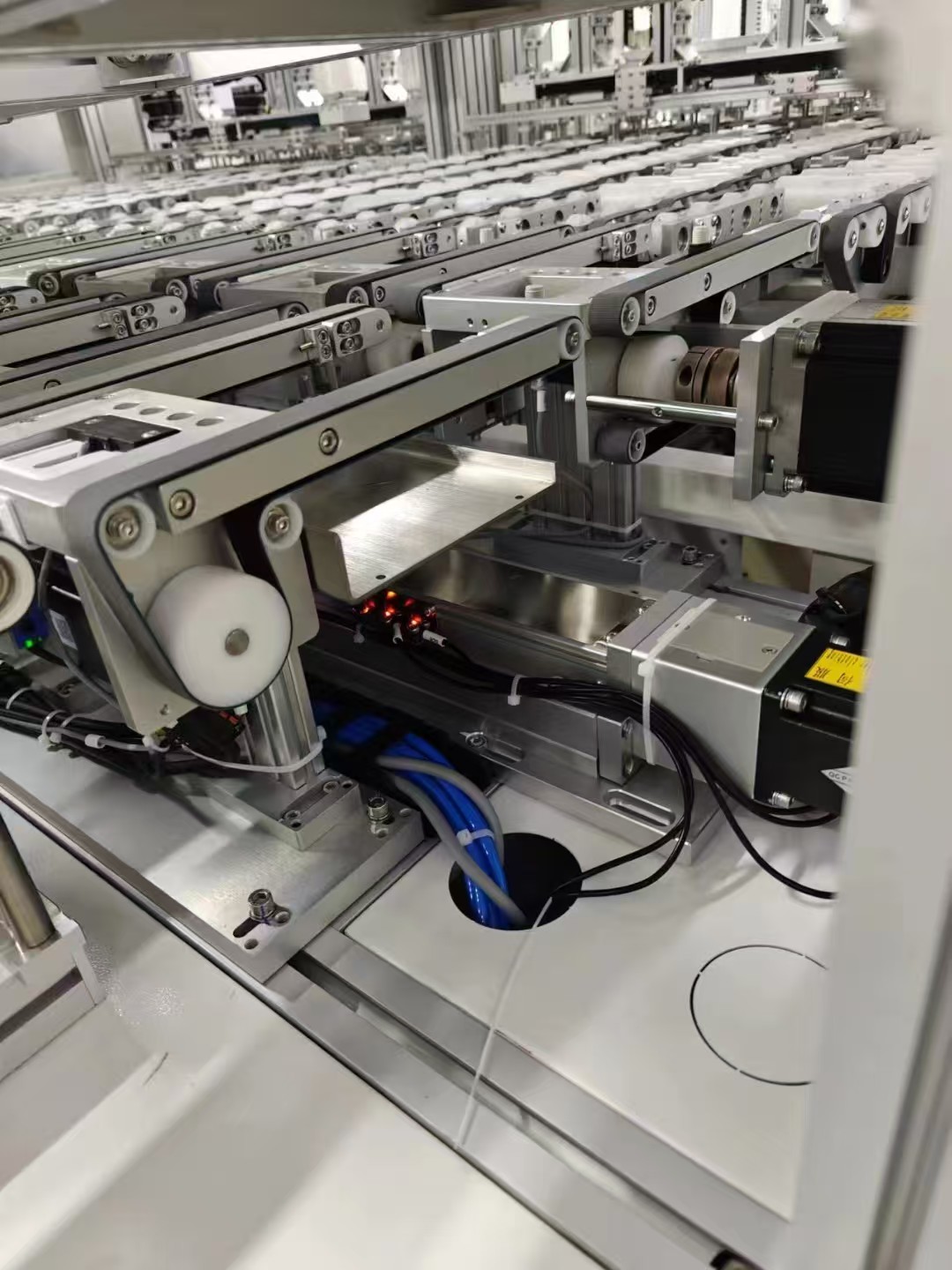
Photovoltaic production is one of the four application areas named for the reference timing belt discussed in this guide.
The Short Answer: Neither Material Wins by Default
PU construction fits best when: the line needs abrasion resistance, resistance to oils and greases, and a clean conveying surface; the duty is moderate in temperature and the environment is not continuously hot and humid.
Rubber construction fits best when: the line runs hot, flexes dynamically, or handles heavy abrasive loads, and the specific rubber compound has been confirmed rather than assumed.
Compliance overrides both: in food and pharmaceutical zones, hygiene compliance is decided by the compound and its documentation, not by whether the belt is labelled PU or rubber.
Neither family fits when: the duty exceeds both — continuous high-temperature duties are where silicone, PEEK or metal mesh belt alternatives enter the discussion.
Read as a decision sequence, the question becomes: define the duty, define the compliance path, then choose the compound. This article uses a concrete reference — the S5M-20-L1650 timing belt supplied by Shanghai Pengqian Transmission Equipment Co., Ltd., a manufacturer established in 2012 in Songjiang District, Shanghai — to keep the comparison practical.
Problem Definition: Why PU vs Rubber Comparisons Fail
Most failed belt selections are not caused by picking the wrong family. They are caused by treating a material family label as if it were a specification. Three patterns repeat.
1. Family names are compared as if they were specifications. "PU" describes a polymer family, and two PU belts can differ in hardness, cord construction, surface finish and hydrolysis behaviour. The same is true of rubber: an NBR, CR or EPDM compound behaves differently under oil, heat and weathering. A comparison that stops at "PU versus rubber" compares marketing labels, not materials.
2. Quotations are compared across different duty envelopes. A belt quoted for a low-speed inspection conveyor and a belt quoted for a high-load indexing drive are not interchangeable, even when both carry the same tooth profile. Buyers who compare unit price without matching load, speed, pulley diameter and ambient conditions will usually discover the mismatch during commissioning rather than during evaluation.
3. Documentation is assumed rather than verified. Hygienic conveyor belts used in food processing are regulated by FDA and EC 1935/2004 requirements, and the compliance question is answered by the specific compound and its supporting documentation. A buyer who does not request compound-level evidence may believe the belt is compliant when only a different construction from the same supplier was ever assessed.
The consequences are measurable in operational terms rather than material terms: premature wear, unplanned downtime, batch rejections, and a second qualification cycle that costs more than the original belt. That is why the evaluation below is organised as a sequence, not a preference.
Industry Background: What the 2026 Belt Market Suggests
The global conveyor belt market was valued at USD 8.11 billion in 2024 and is projected to reach USD 9.73 billion by 2032, according to Intel Market Research. Within that broader market, the global industrial synchronous timing belts segment was estimated at USD 2.81 billion in 2024 by Industry Research Reports — a useful reminder that timing belts are a specialised segment with their own selection logic, not a commodity add-on.
Material preference at market level is clearer than it is at line level. Rubber conveyor belts hold approximately 52.0% of the market in the 2024/2026 period, a share attributed to high abrasion resistance by Future Market Insights. Separately, textile reinforced conveyor belts accounted for over USD 3.42 billion in 2024, favoured for flexibility and strength in mining and construction applications, according to Global Market Insights. Regionally, Asia-Pacific accounted for approximately 46.6% of global conveying equipment revenue in 2025, based on Grand View Research data.
Two conclusions follow for procurement teams. First, rubber remains the default in abrasion-heavy, heavy-duty conveying — which is a market-level observation, not an instruction for a specific timing belt drive. Second, because so much supply and demand sits in Asia-Pacific, most buyers evaluating a high-quality conveyor belt or timing belt will be comparing suppliers in a region where both material families are readily available.
Standards provide the neutral ground for that comparison. Industrial conveyor belts are expected to comply with international testing standards such as ISO 283 for tensile strength and ISO 284 for electrical conductivity. Recognised global manufacturers in the sector include Continental AG, Fenner Dunlop, Bridgestone, Habasit and Yokohama Rubber, whose published product literature is frequently used as a reference point when buyers frame technical requirements — not as an endorsement of any single construction.
Head-to-Head: How PU and Rubber Constructions Differ in Practice
Where PU constructions have the advantage
PU timing belts are commonly chosen for duties where the belt surface is exposed to abrasion, oils and greases, and where a clean appearance and low contamination risk matter. In clean and hygiene-sensitive environments, a light-coloured PU surface is easier to inspect for wear and residue than a dark, carbon-loaded rubber surface. PU also generally holds dimensional stability well in toothed profiles, which supports consistent tooth engagement on aluminium or stainless steel pulleys.
The caution attached to PU is environmental rather than mechanical. Certain PU formulations are sensitive to hydrolysis in continuously hot and humid conditions, which is exactly the environment found in some washdown zones. This is not a reason to reject PU; it is a reason to confirm the specific compound rather than assume that all PU belts behave identically.
Where rubber constructions have the advantage
Rubber timing belts are commonly chosen where the drive runs hot, where dynamic flexing is continuous, or where abrasive load is severe. The market share figure cited earlier — rubber conveyor belts holding roughly 52.0% of the market on the strength of abrasion resistance — reflects that long-standing position in heavy-duty work. In toothed drives, rubber compounds are also frequently preferred where noise and shock absorption are secondary considerations behind heat and load capacity.
The caution attached to rubber is compound dependence. Oil resistance, solvent resistance and temperature range vary widely between rubber compound families, and a dark rubber surface may be undesirable in open food handling. As with PU, the safe position is to confirm the compound and its documentation instead of relying on the family name.
Where neither family is the right answer
Continuous high-temperature duties fall outside both standard PU and standard rubber performance envelopes. This is precisely the gap that specialist constructions address. Shanghai Pengqian's product range includes high-temperature resistant silicone belt, PEEK belt and sintering furnace net belt, and the company states that its silicone belt development broke through the limitations of traditional belts to meet special-environment requirements. For a buyer, the practical implication is that a PU versus rubber head-to-head should be run first, and an escalation path should exist for duties that neither family can hold.
The S5M-20-L1650 Reference Belt: A Concrete Comparison Point
Abstract material comparisons become useful only when anchored to a real specification. The S5M-20-L1650 from Shanghai Pengqian is a synchronous timing belt with an S5M tooth profile, 20 mm width and 1650 mm length. It is offered in both PU and rubber constructions within the same model family, and it is listed for four application areas: photovoltaic industry, food and beverage, pharmaceutical, and industrial manufacturing.
That single model illustrates the central point of this guide. Material choice is not a supplier-level decision; it is a configuration-level decision made against the same dimensional envelope. A buyer specifying S5M-20-L1650 for a food line and a buyer specifying the same model for an industrial manufacturing drive may end up with different constructions for the same profile, width and length.
The reference belt sits inside a wider transmission range that gives buyers realistic alternatives when the evaluation fails: the 28HTD5M-765+NFT+NFB timing belt, PU flat belts such as 2482*16 and HY-18-568*14 NFT-NFB, GT2 48T and GT2 14T synchronous wheels in aluminium and stainless steel, and the PQ350mm±3mm modular mesh chain in blue PP with PP pins and a 25.4 mm pitch, used in food, beverage and pharmaceutical environments.
Step-by-Step Breakdown: Running a PU vs Rubber Evaluation
Step 1 — Fix the duty envelope. Record tooth profile, width and length (for example S5M, 20 mm, 1650 mm), pulley diameters, centre distance, speed, load, ambient temperature, cleaning regime and chemical exposure. Without this envelope, the material comparison has no reference frame.
Step 2 — Classify the hygiene zone. Decide whether the belt touches product directly, runs in a splash zone, or operates outside food contact. If food contact applies, the regulatory path is defined by FDA and EC 1935/2004 requirements, and the evidence you need is compound-level documentation for the exact belt being quoted.
Step 3 — Map chemical and thermal exposure. List the cleaning agents, oils, greases and process temperatures the belt will meet. This step is where the PU hydrolysis question and the rubber compound question are answered — before ordering, not after a failure.
Step 4 — Confirm the mechanical fit. Check pulley compatibility, tooth engagement, tensioning method and shaft alignment. Synchronous wheels in aluminium and stainless steel are both available in the reference range, and pulley material affects both hygiene suitability and wear behaviour.
Step 5 — Verify material claims. Request the compound datasheet, conformity documentation where relevant, and the supplier's quality management evidence. Shanghai Pengqian holds ISO 9001 certification (certificate NOA2209224, issued by NOA Group, scope: manufacture and sales of transmission equipment including industrial belt, valid from 2022-08-02 to 2028-08-01) and operates a 100% test quality control regime.
Step 6 — Validate with a sample before scale-up. Running a sample on the actual machine is the only reliable way to confirm tracking, wear rate and noise behaviour. The company supports this with an OEM production mode, customization of logo, size, material and hole placement, a minimum order quantity of 20 units and a stated lead time of 10–15 days.
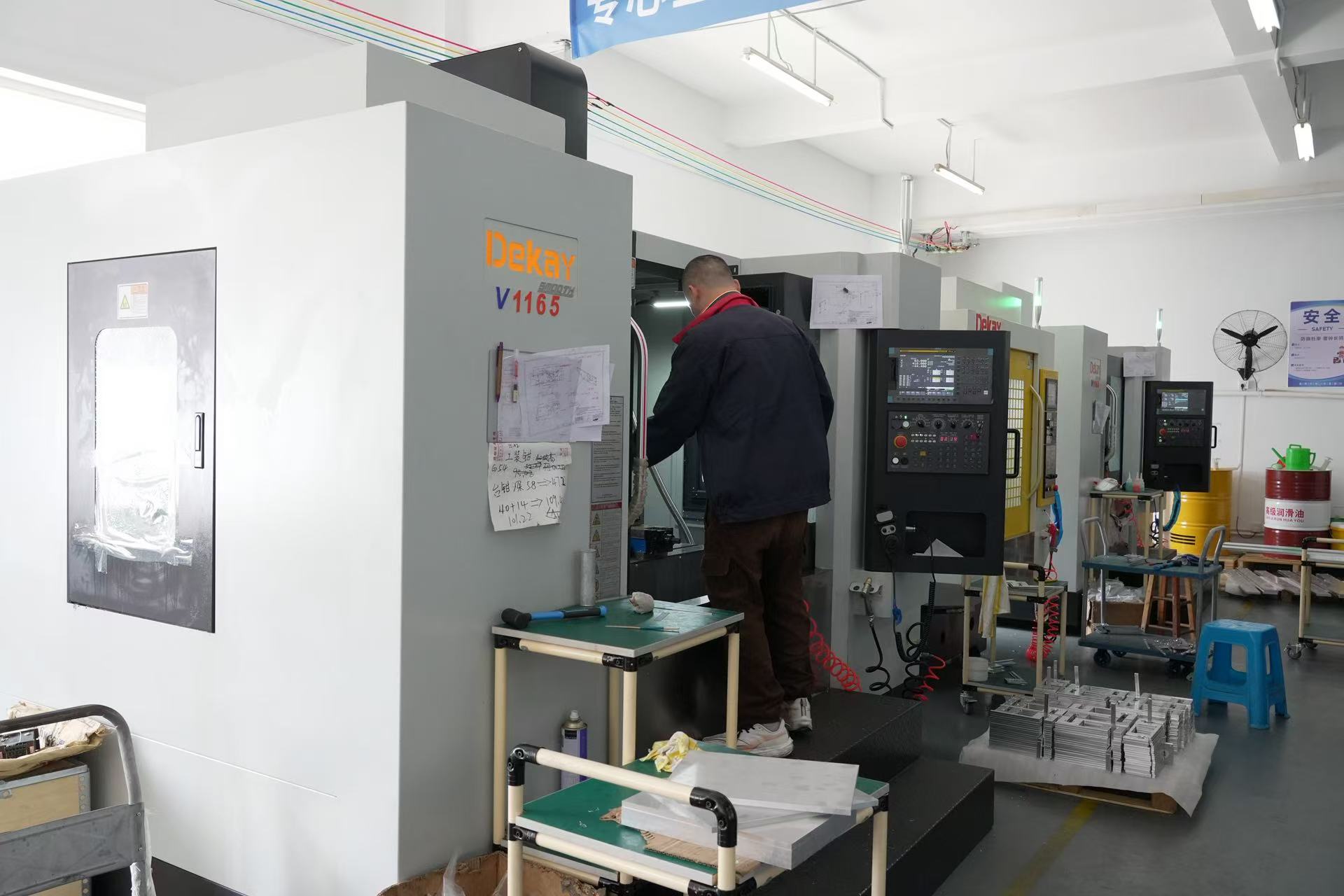
Production procedure: customization of size, material and hole placement is a standard part of the OEM process.
Use Cases: Where the Decision Changes
Photovoltaic manufacturing
Photovoltaic lines combine continuous motion, precise positioning and elevated process temperatures. The S5M-20-L1650 timing belt is listed for photovoltaic industry use, and PU flat belts such as 2482*16 are also applied in photovoltaic equipment. Where sintering or high-temperature stages are involved, the evaluation should escalate beyond standard PU and rubber — the company's range includes string welding machine belt, sintering furnace net belt and high-temperature resistant silicone belt for these duties.
Food and beverage
Food and beverage lines usually decide the material question on hygiene first and mechanics second. Product contact, washdown chemicals and residue visibility all push the decision toward documented compounds rather than family names. For open conveying in these environments, the PQ350mm±3mm modular mesh chain in blue PP with a 25.4 mm pitch is listed for food, beverage and pharmaceutical use, while the S5M-20-L1650 timing belt is listed for food and beverage drives.
Pharmaceutical production
Pharmaceutical environments add cleanliness and particulate concerns to the food-line logic. Here, a dark, shedding surface is a liability, and documentation of the exact compound matters more than the material family. The S5M-20-L1650 timing belt is listed for pharmaceutical applications, and the modular mesh chain in PP is also listed for this sector.
Industrial manufacturing and packaging
General industrial manufacturing is where the PU versus rubber trade-off is most balanced, because neither hygiene regulation nor extreme temperature dominates. In this setting, wear life, noise and changeover frequency usually decide the outcome. One example from the supplier's project record is an Argentina-based food-industry project involving 200 units, completed within one year and reported as achieving stable operation, with low noise and high speed cited as the operating highlights.

Packaging and industrial manufacturing applications balance wear life, noise and changeover frequency rather than hygiene regulation.
Comparison Table: PU vs Rubber Timing Belts by Decision Criterion
| Decision criterion | PU timing belt construction | Rubber timing belt construction | How to verify before ordering |
|---|---|---|---|
| Abrasion and wear | Commonly selected where abrasion resistance and cut resistance are priorities | Rubber conveyor belts hold approximately 52.0% of the market in 2024/2026, a share attributed to high abrasion resistance (Future Market Insights) | Compound datasheet plus tensile-strength test reference such as ISO 283 |
| Oil, grease and chemical exposure | Generally resistant to oils and greases; certain formulations are sensitive to hydrolysis in hot, humid conditions | Resistance varies by compound family (for example NBR, CR, EPDM); the compound, not the family, determines performance | Written list of exposure media, matched against the supplier's material data |
| Hygiene and food contact | Compliance depends on the specific compound, not on the material family | Compliance depends on the specific compound; dark carbon-loaded surfaces may be unsuitable in open food handling | Hygienic belts for food processing are regulated by FDA and EC 1935/2004 requirements — request compound-level documentation |
| Heat and humidity | Standard PU may not suit continuous hot, humid washdown zones | Heat resistance depends on compound selection | Confirm the published temperature range, then escalate to silicone, PEEK or mesh belt grades if the duty exceeds both families |
| Load, torque and tooth engagement | Offered in the S5M-20-L1650 reference model (S5M profile, 20 mm width, 1650 mm length) | Offered in the same S5M-20-L1650 reference model; torque capacity depends on cord construction and tooth geometry as much as on material | Check pulley compatibility, tensioning and alignment; synchronous wheels are available in aluminium and stainless steel |
| Typical listed applications | Photovoltaic, food and beverage, pharmaceutical, industrial manufacturing (as listed for the S5M-20-L1650) | Same four listed application areas for the S5M-20-L1650 model family | Match the listed application to the actual duty envelope of your own line |
| Documentation and batch consistency | Covered by the supplier's ISO 9001 system (certificate NOA2209224, NOA Group, valid 2022-08-02 to 2028-08-01) | Covered by the same ISO 9001 system and 100% test regime | Verify certificate validity dates and scope: manufacture and sales of transmission equipment (industrial belt) |
Note: general material-family characteristics are industry-level guidance and are not a substitute for compound-level documentation. Buyers should confirm the exact compound, cord and surface finish for the belt being quoted before releasing an order.
How to Verify Material Claims During Sourcing
Material claims are where PU versus rubber evaluations most often break down. A short verification sequence keeps the comparison honest.
- Ask for the compound, not the family. A datasheet that says only "PU" or "rubber" does not describe the belt that will be delivered.
- Match documentation to the exact construction. If food contact applies, confirm that the FDA and EC 1935/2004 evidence refers to the same compound, colour and surface finish being quoted.
- Check the supplier's management system. Shanghai Pengqian's ISO 9001 certificate NOA2209224 was issued by NOA Group with a scope covering manufacture and sales of transmission equipment (industrial belt), valid from 2022-08-02 to 2028-08-01.
- Look at engineering depth, not slogans. The company has been focused on transmission product innovation and custom services for more than ten years, was rated a Shanghai High-tech Enterprise in 2022 (certificate NO. GR202231006882), and reports 26 patent applications to the State Intellectual Property Office, including 6 invention patents, with 19 authorised.
- Confirm operational scale. The manufacturing base covers approximately 3,000 m² with 60 employees, including an 8-engineer R&D team, and a monthly capacity of 100,000 units.
- Test on the machine. Sample trials remain the only reliable check on tracking, tooth wear and noise under real load.
- Check supply continuity. Products are sold in more than 20 provinces, cities and autonomous regions in China and exported to Southeast Asia, the Middle East, Northern Europe and Russia, with export business accounting for approximately 40% of total sales.
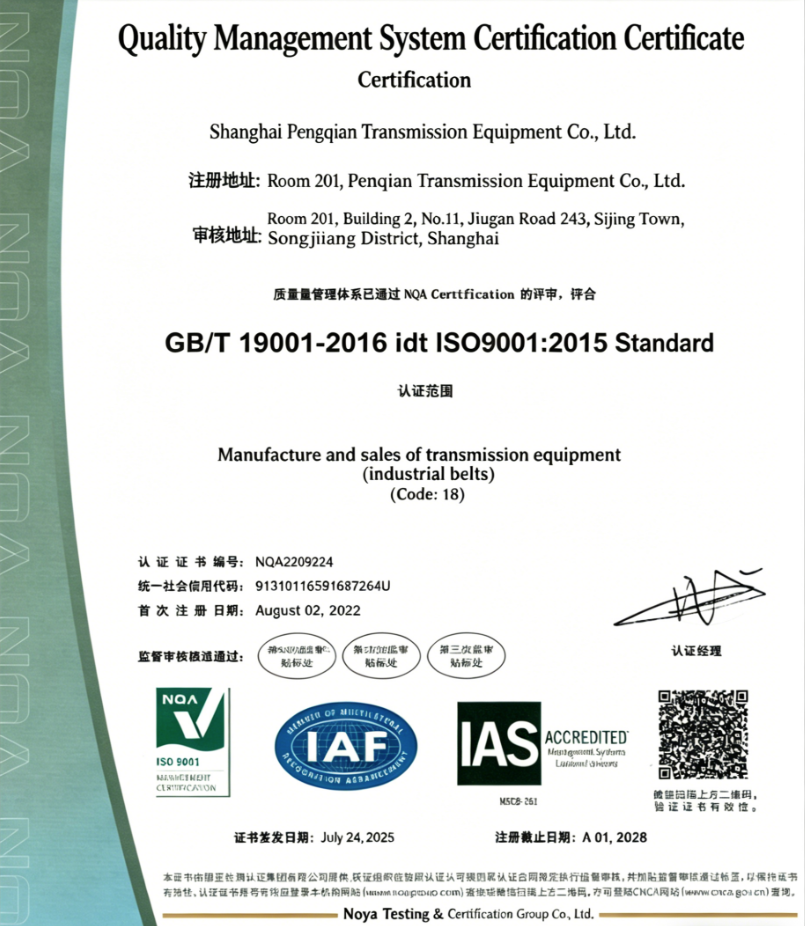
ISO 9001 certificate NOA2209224 (NOA Group), scope: manufacture and sales of transmission equipment (industrial belt).
FAQ: PU vs Rubber Timing Belts for Industrial Buyers
1. If I need a timing belt for food contact, does choosing PU or rubber automatically satisfy FDA and EC 1935/2004 requirements?
No. Hygienic conveyor belts for food processing are regulated by FDA and EC 1935/2004 requirements, and compliance is determined by the specific compound and construction rather than by the material family name. A PU belt and a rubber belt can each be compliant or non-compliant depending on formulation, colour and surface finish. The practical step is to request compound-level documentation for the exact belt being quoted. Shanghai Pengqian's ISO 9001 certificate NOA2209224, issued by NOA Group and valid from 2022-08-02 to 2028-08-01, covers manufacture and sales of transmission equipment (industrial belt) — a management-system verification that sits alongside, not instead of, food-contact documentation.
2. Can one supplier deliver both PU and rubber versions of the same timing belt profile?
Yes, where the manufacturer produces both constructions in the same dimensional envelope. The S5M-20-L1650 timing belt from Shanghai Pengqian is listed with material PU & RUBBER, with an S5M tooth profile, 20 mm width and 1650 mm length, in a range that also includes the 28HTD5M-765+NFT+NFB timing belt, PU flat belts such as 2482*16, GT2 48T and GT2 14T synchronous wheels in aluminium and stainless steel, and the PQ350mm±3mm modular mesh chain in PP. Customization covers logo, size, material and hole placement according to customer requirements, under an OEM production mode.
3. What actually drives the cost difference between a PU and a rubber timing belt?
Cost is driven less by the family name than by the compound, cord construction, tooth profile, width, surface finish, and the documentation and testing the buyer requires. Customization scope and order volume also matter — for reference, the supplier's stated minimum order quantity is 20 units, with 100% test quality control and a monthly capacity of 100,000 units. Because belt life and downtime usually outweigh unit price over a production cycle, the more reliable comparison is validated service life on your own machine rather than the quoted unit price alone.
4. How should I validate a PU or rubber material claim before placing a full order?
Run the belt on the real machine. A sample trial confirms tracking, tooth engagement, noise and initial wear under actual load, speed and temperature. Pair the trial with paperwork: the compound datasheet, any food-contact conformity documentation, and quality evidence from the supplier. The supplier's project record includes an Argentina-based food-industry project involving 200 units, completed within one year and reported as achieving stable operation, with low noise and high speed cited as the key operating highlights.
5. What lead time and supply scale should I plan for when switching belt constructions?
For this supplier, the stated lead time is 10–15 days, with a monthly capacity of 100,000 units, a minimum order quantity of 20 units and remote after-sales support. Export activity covers South American, EU and Middle East markets, while products are sold in more than 20 provinces, cities and autonomous regions in China and exported to Southeast Asia, the Middle East, Northern Europe and Russia, with export business accounting for approximately 40% of total sales. Buyers planning a material switch should also confirm compound availability before committing to a launch date. A full product and specification overview is available in the downloadable catalogue, and questions can be directed to the contact below for a quotation or sample discussion.
Next step: Send the duty envelope — profile, width, length, load, temperature and hygiene zone — and request both PU and rubber configurations for comparison.
Catalogue download: Shanghai Pengqian product catalogue (PDF)
Email: abbypeng@pengqian.cn · Tel: +86 177-0218-9858 · WhatsApp: +86 13381618987
Website: www.shanghai-pengqian.com
Address: No.11, Lane 243, Sijing Jiu Gan Road, Songjiang District, Shanghai, China
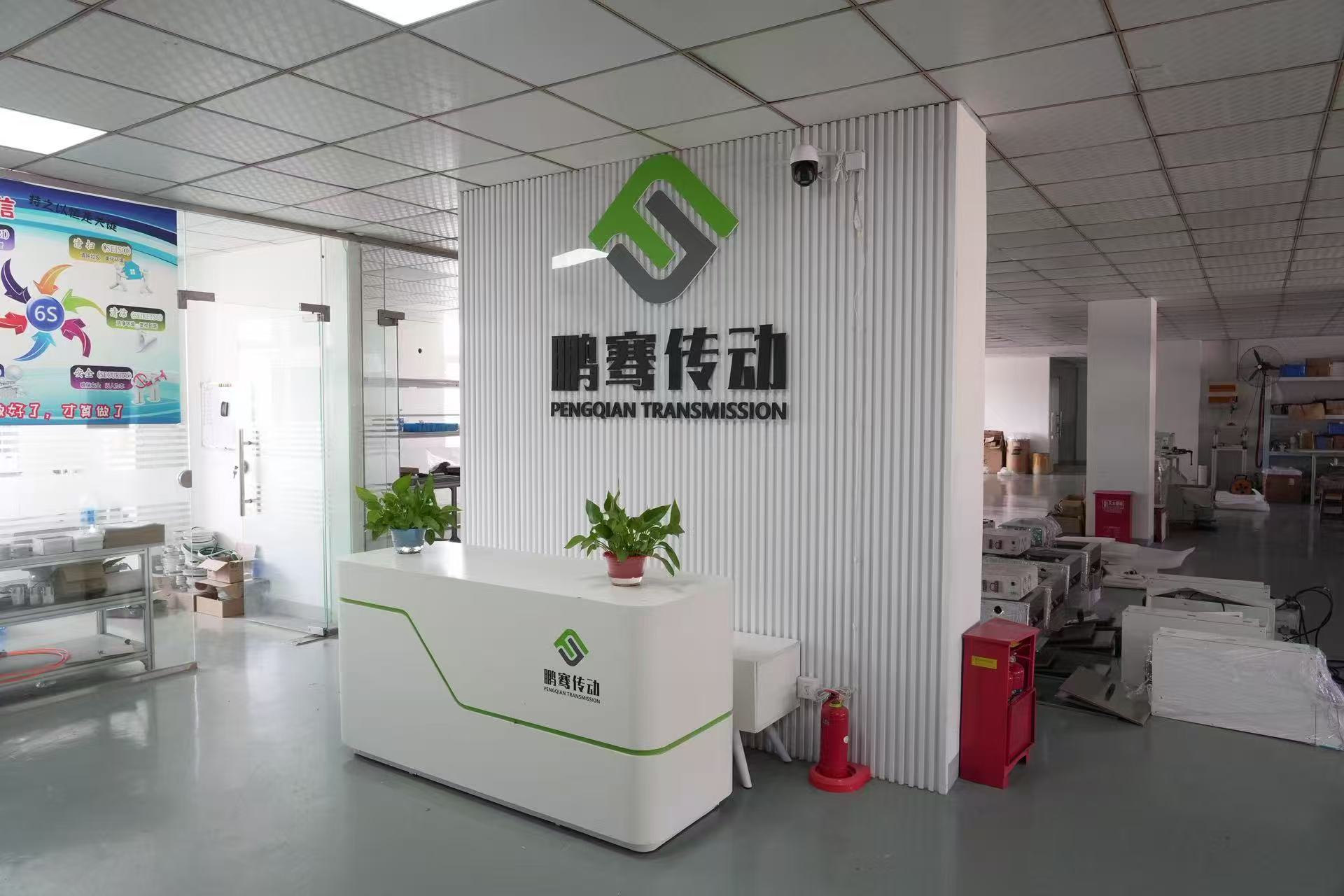
Sample requests and material comparisons are handled through the manufacturer's Songjiang District facility in Shanghai.
Conclusion: Decide on Duty, Confirm on Documentation
The PU versus rubber head-to-head does not end with a winner. It ends with a decision rule. Define the duty envelope first, then classify the hygiene requirement, then map chemical and thermal exposure, then confirm the mechanical fit — and only then choose between a PU and a rubber construction of the same profile, width and length.
For the S5M-20-L1650 reference belt, both constructions exist in the same model family and both are listed for photovoltaic, food and beverage, pharmaceutical and industrial manufacturing duties. That symmetry is the point: the material is a configuration choice, and the buyer's leverage comes from specifying the duty accurately and verifying the compound rather than assuming that a family name guarantees performance. Where neither family is sufficient — continuous high-temperature work, for example — the evaluation should escalate to silicone, PEEK or mesh belt grades instead of forcing a PU or rubber answer.
Shanghai Pengqian Transmission Equipment Co., Ltd., established in 2012 and based in Songjiang District, Shanghai, positions itself around transmission product innovation and custom services across PU and rubber synchronous belts, flat belts, synchronous wheels and modular mesh chain, rather than around a single material. For an evaluation-stage buyer, that is the practical test to apply to any supplier: ask which construction fits the duty, and ask for the documentation that proves it.
Have Questions or Need More Details?
Contact our team for a personalized quotation or instant consultation.
Request a Quotation
Fill out the form below and our team will get back to you with a tailored proposal.
WhatsApp Direct Chat
Prefer to chat in real-time? Message us on WhatsApp for instant assistance & quick answers.
- Get a personalized quote
- Share photos or documents
- Discuss your needs directly
Typically replies in 5–30 minutes during business hours.