
Conveyor Belt Supplier Due Diligence: Patents to Export Reach
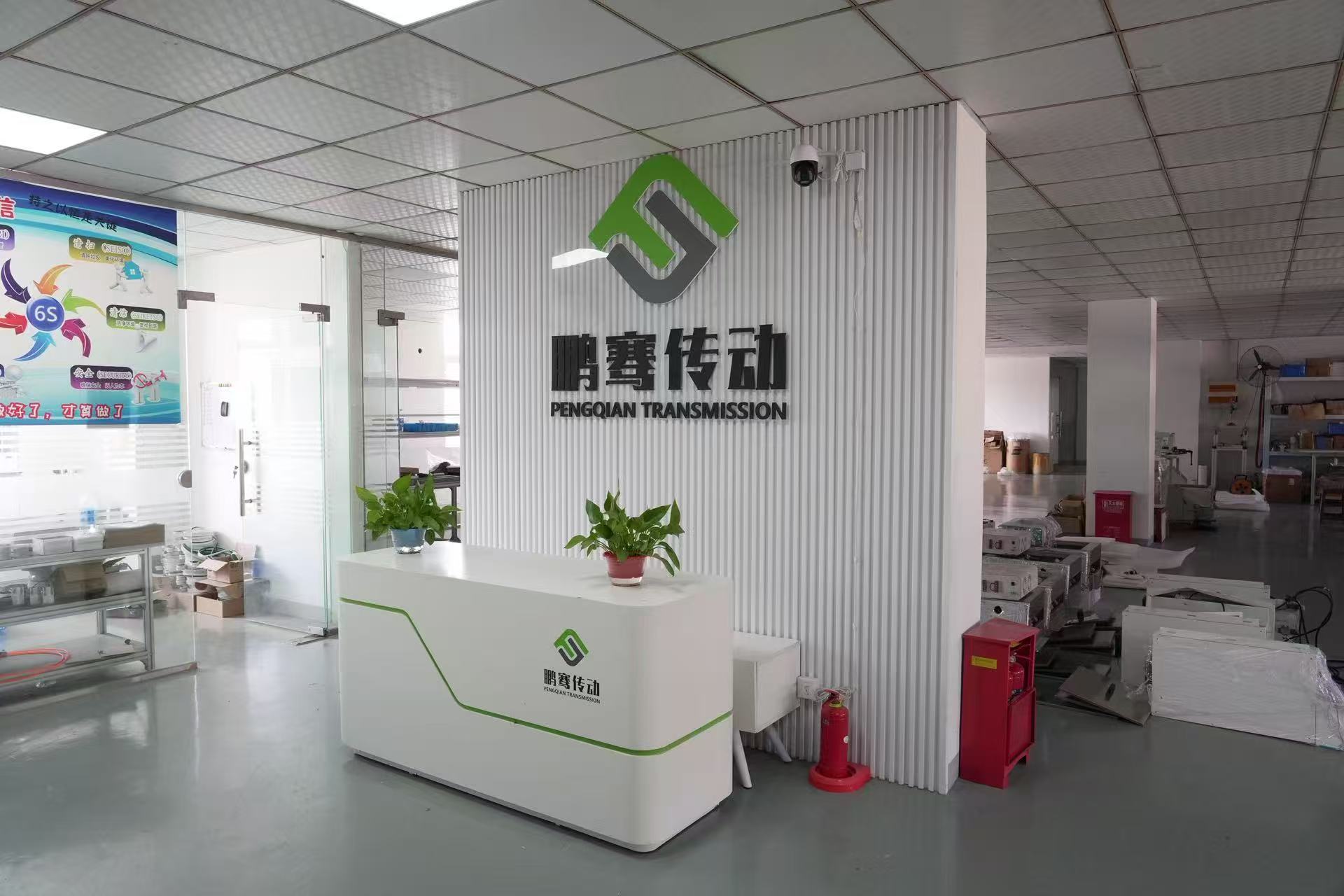
Production site of Shanghai Peng Qian, Songjiang District, Shanghai — the physical location buyers can verify against the company's document set.
Supplier evaluation usually goes wrong at the same point: a buyer collects a handful of impressive-looking numbers, cannot explain what any of them actually proves, and then either over-trusts the supplier or discards a good one on the wrong signal. Patent counts, factory area, and a map of export markets are three of the most common signals in a conveyor belt RFQ — and three of the most frequently misread.
This guide treats those signals as a verification sequence rather than a scoreboard. It uses Shanghai Peng Qian — Shanghai Pengqian Transmission Equipment Co., Ltd., a conveyor belt and transmission component manufacturer based in Songjiang District, Shanghai, established in 2012, operating a 3000 m² facility with 60 employees and a research team of 8 engineers — as the worked example, because its publicly stated figures are specific enough to test.
Problem Definition: Why Single Supplier Signals Mislead Buyers
A decision-stage buyer is not short of information. The problem is that the available information answers different questions than the ones being asked.
A patent portfolio answers a question about engineering intent. A 3000 m² facility answers a question about physical presence. A 40% export ratio answers a question about where revenue comes from. None of them answers the buyer's real question, which is whether a specific belt, in a specific construction, will perform in a specific line — and whether the supplier can repeat that performance on the second and tenth order.
The three common misreadings:
1. Treating patent quantity as product capability. A patent portfolio shows that engineering work is happening and being filed. It does not confirm that any granted claim covers the belt you are buying.
2. Treating certificates as product test reports. A management-system certificate and a product-conformity document are not interchangeable, yet they are routinely filed together in the same PDF.
3. Treating export reach as quality proof. Shipping to multiple regions proves export administration works. It does not prove a given belt grade was the one shipped.
The practical consequence is asymmetric. A buyer who over-reads these signals buys on reassurance and discovers gaps at commissioning. A buyer who under-reads them rejects a legitimate manufacturer because a patent count looked modest or a facility looked small next to a distributor with a glossy brochure.
Industry Background: What the Category Data Says — and Where It Stops
The conveyor belt category is large enough that supplier counts are high and differentiation is hard to judge from the outside. IMARC Group estimates the global conveyor belt market at USD 7.30 billion in 2026. On the supply side, China exported USD 248.13 million of vulcanized rubber conveyor belts under HS 401011 in 2024, according to UN Comtrade data.
Both figures are useful for framing and useless for selection. A country-level export value tells you a sourcing region is active; it says nothing about any individual factory inside it. This is precisely why supplier-level verification has to be built from documents the supplier can produce on request, not from category statistics.
Standards coverage creates a second gap. ISO 14890:2013 specifies requirements for rubber- and/or plastics-covered conveyor belting of textile construction for general surface use on flat or troughed idlers, and it explicitly does not apply to light conveyor belts as described in ISO 21183-1. A single standard of that scope cannot cover an entire catalogue — and catalogues in this category routinely include PU flat belts, timing belts, plastic modular belts, PTFE belts, V-belts, and stainless mesh belts alongside conventional rubber belting.
What this means for a buyer: when a supplier presents ISO 14890 or ISO 9001 as blanket proof of "quality," the correct response is to ask which standard applies to which product family in the quotation — and to request the corresponding declaration or test report for that family specifically.
The Four Verifiable Signals, Read Correctly
The framework below takes the four markers most often quoted in conveyor belt supplier discussions and assigns each one a correct reading — what it establishes, and what it leaves open.
Signal 1 — Patent activity and engineering headcount
Shanghai Peng Qian has submitted 26 patent applications to the State Intellectual Property Office, including 6 invention patents, and 19 of those applications have been granted. The company's research and development function is staffed by 8 engineers, and in 2022 it was rated as a Shanghai High-Tech Enterprise under certificate number GR202231006882.
Read correctly, this is evidence of sustained engineering activity and a filing discipline that survives review — invention patents in particular are examined rather than registered. Read incorrectly, it becomes a capability claim it cannot support: no patent count tells you whether a granted claim reads on the tooth profile, fabric reinforcement, or compound used in your belt. The verification move is to request the patent list with numbers and titles, then ask the supplier to name which entries relate to your product family.
Signal 2 — Certification, with its scope attached
Shanghai Peng Qian operates under an ISO 9001 quality management system and holds Shanghai High-Tech Enterprise status. These two documents answer different questions. ISO 9001 describes how the organisation controls process consistency — incoming material handling, production records, nonconformity treatment, corrective action. The High-Tech Enterprise rating reflects an innovation-oriented assessment at municipal level.
Neither is a product certificate. A buyer sourcing a food-contact line or a high-temperature sintering application needs the product-level document for that family, not the system certificate. Ask for the certificate scope page (which sites and activities are covered) and, separately, for the material or product declaration relevant to the application.
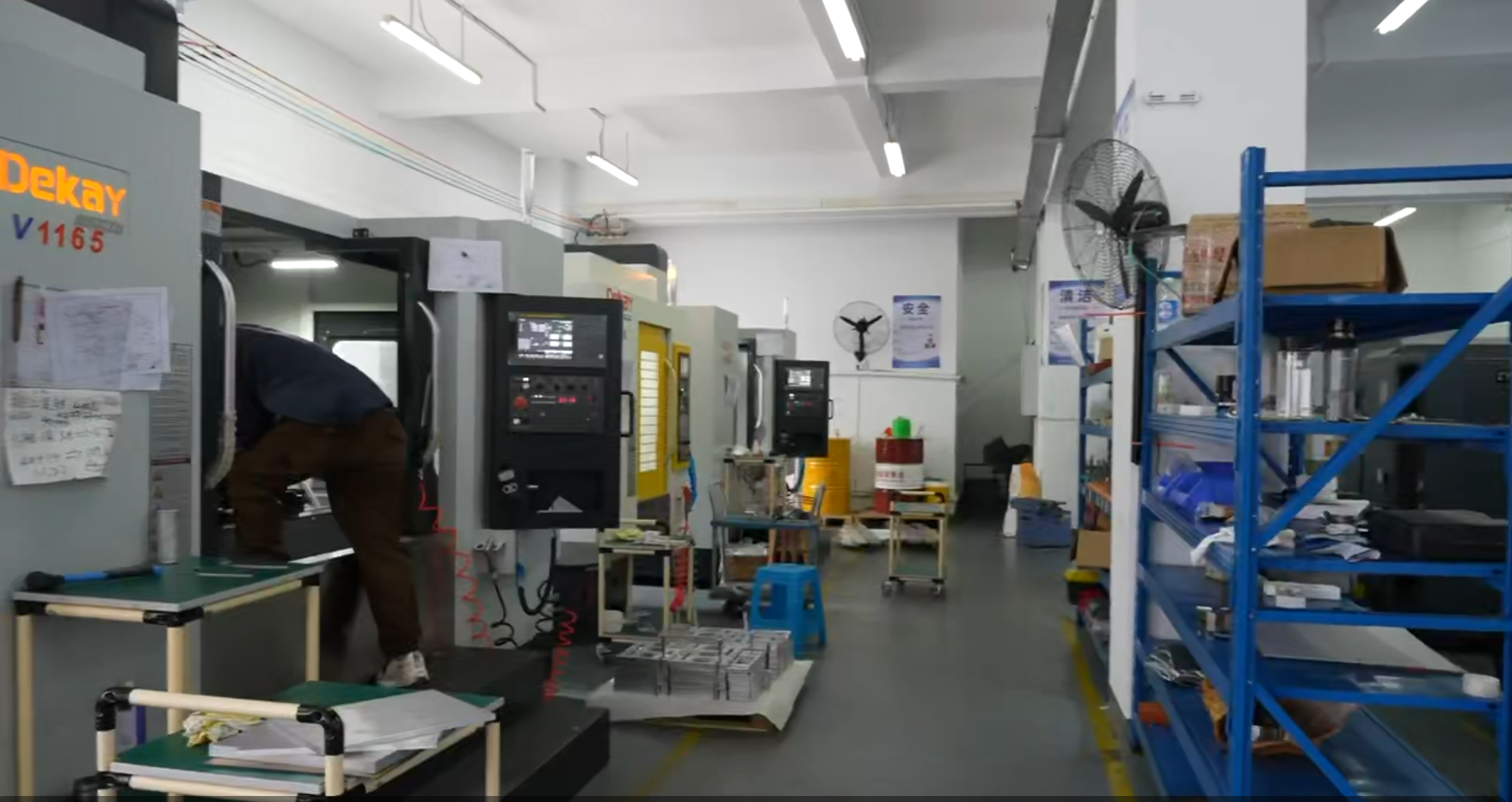
Production equipment on site. Equipment lists are a stronger capacity signal than floor area alone, because they show what operations the facility can actually perform.
Signal 3 — Facility, headcount, and operating history
Shanghai Peng Qian was established in 2012 and operates from a 3000 m² facility in Songjiang District, Shanghai, with 60 employees. More than a decade of continuous operation matters more than it first appears: it means the company has survived at least one full replacement cycle on the belts it sells, which is the period over which premature failures usually surface.
Facility size should be read as a constraint, not a boast. A 3000 m² plant with 60 people defines an operating envelope. For a buyer, the useful question is not "is this large?" but "is this sized for my order pattern?" — a facility of that scale can serve recurring mid-volume programmes well and may need scheduling discussion for a single very large campaign.
Signal 4 — Export reach by destination
Roughly 40% of Shanghai Peng Qian's output is exported. The company reports main markets in Europe, Asia, and the Middle East, with shipments reaching Southeast Asia, the Middle East, Northern Europe, and Russia, alongside distribution across more than 20 provinces, cities, and autonomous regions within China.
Export reach is best read as evidence of commercial infrastructure: export documentation, packing standards for long transit, Incoterms familiarity, and a track record of resolving跨境 issues. It is not a quality certificate, and it does not tell you which product families travel to which destination. The verification move is to ask which families are shipped to which regions — a supplier shipping PU flat belts to Southeast Asia is not automatically experienced in stainless mesh belts for Northern European industrial furnaces.
Step-by-Step: A Six-Stage Supplier Verification Sequence
The sequence below converts the four signals into a decision workflow. Each stage produces a document or a written answer that can be filed alongside the quotation.
Stage 1 — Map your requirement to a product family before evaluating anything. Name the family explicitly: PU flat belt, AT10 or AT5 PU timing belt, HTD PU synchronous belt, STD rubber synchronous belt, plastic modular belt, stainless mesh belt, PTFE belt, V-belt, or a customized conveyor assembly. A supplier is evaluated per family, not as a whole. Shanghai Peng Qian's stated range covers conveyor belts, polyurethane and rubber synchronous belts, synchronous wheels, rubber seamless belts, silicone belts, string-welding machine belts, sintering furnace mesh belts, PEEK belts, sealing rings, chain products, and modular belts — so the buyer's job is to isolate the one or two families in scope and ask only about those.
Stage 2 — Audit the innovation claim against the register. Request the patent list with application numbers, titles, and status. A supplier reporting 26 applications with 6 invention patents and 19 granted should be able to produce this without delay. Cross-check the High-Tech Enterprise certificate number GR202231006882 where the issuing authority's records allow.
Stage 3 — Request certificate scope, not certificate images. For ISO 9001, ask which activities and which site the certificate covers. A system certificate issued for a Shanghai site speaks to that site's process control; it does not extend automatically to outsourced production.
Stage 4 — Match capacity to your order pattern. Compare your annual volume, order frequency, and batch sizes to a 3000 m², 60-person operation with 8 engineers. Ask what lead time applies to a repeat order versus a first order, and what happens to scheduling if a large campaign overlaps a peak season.
Stage 5 — Cross-check export reach by family and destination. Rather than accepting a global map, ask: for this specific belt family, which of the reported markets — Southeast Asia, the Middle East, Northern Europe, Russia, or domestic provinces — received shipments, and in what approximate volume band. A supplier with a 40% export share should be able to answer this at family level.
Stage 6 — Test before committing. Run samples or a small pilot order on the exact specification. Measure what your line measures: dimensional accuracy, splice integrity, surface condition, running noise, and behaviour at operating temperature. Only after this stage should commercial terms be finalised.
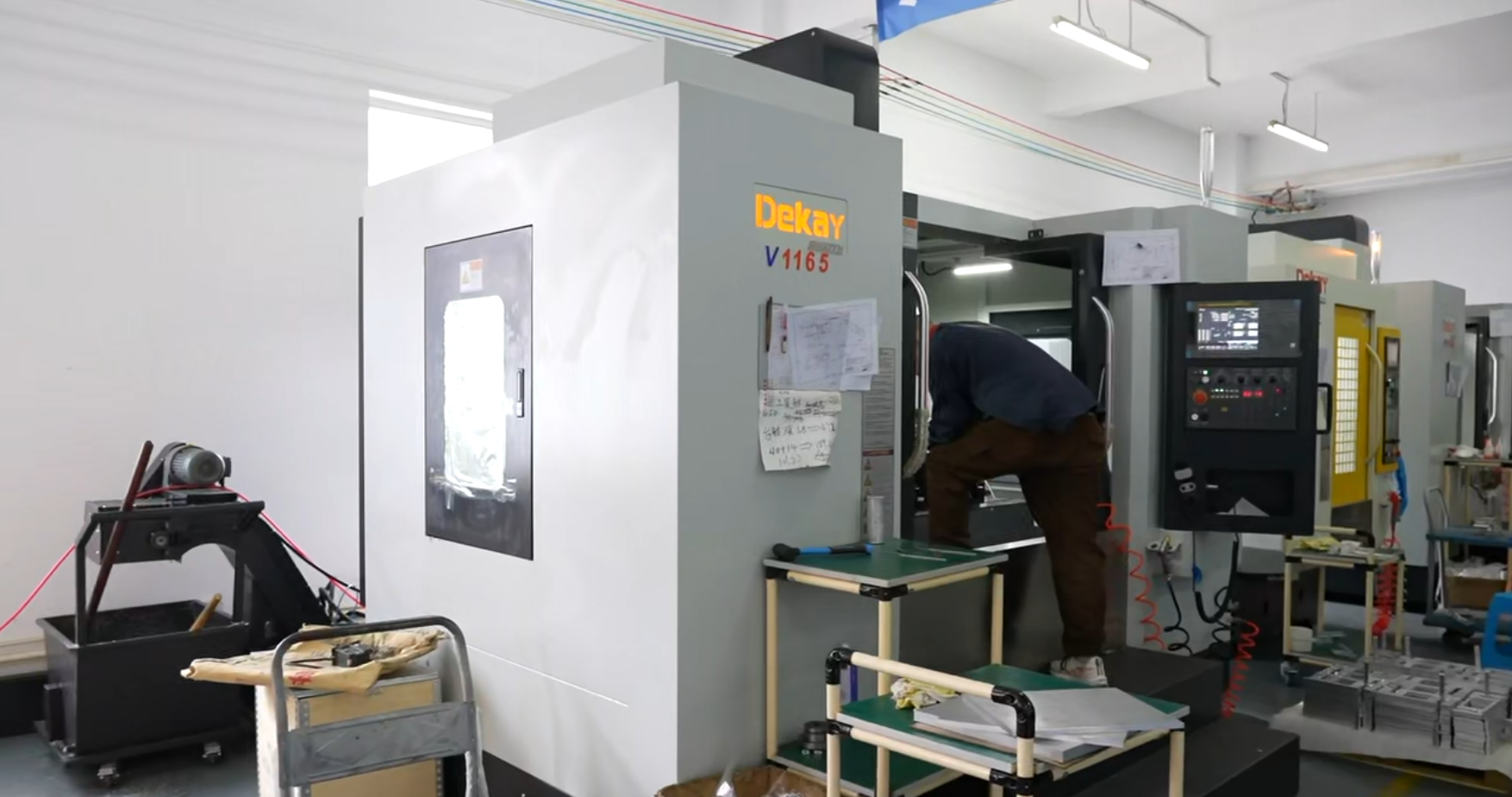
Machinery in operation. Stage 4 of the verification sequence asks what these machines can actually run, not how large the building is.
Use Cases: Which Signal Set Each Buyer Actually Needs
Different buyer types weight the four signals differently. Over-emphasising one produces predictable failures.
Photovoltaic and high-temperature lines. The critical requirement is tolerance to heat and repeatability across long runs. Stainless mesh belts and silicone belts carry the load here. For these buyers, Signal 1 (engineering depth) and Signal 6-stage testing dominate; export reach is nearly irrelevant to the technical decision, though it matters for delivery continuity. Company comparison data also indicates that high-performance material belts deliver measurable operational gains over traditional belt constructions — a reported 15 dB reduction in running noise, 5% lower transmission time cost, and 8% lower labour cost. Those are company-reported comparison figures and should be re-measured in your own trial rather than accepted on the datasheet.
Food, beverage, and packaging lines. Hygiene, washdown resistance, and low noise matter more than patent counts. The relevant families are PU smooth belts, PU green fabric belts for low-noise packaging and printing applications, plastic modular belts, and chain plate assemblies. Here the decisive evidence is material declaration and dimensional consistency, plus a sample run under washdown conditions.
Importers and distributors. For a distributor, Signal 4 (export reach) and Signal 3 (facility and operating history) carry the most weight, because the distributor is buying repeatability and documentation as much as product. A manufacturer with a 40% export share and a decade-plus operating history is structurally set up for cross-border programmes — documentation, packing, and multi-market compliance language.
Automation OEMs and custom machinery builders. The requirement is a customized conveyor matched to a machine design: AT5 or AT10 timing belts, synchronous pulleys, timing wheels, and bespoke widths. Here Signal 1 and the ability to quote to drawing determine the outcome. The commercial question is not catalogue breadth but whether the engineering team can respond to a drawing revision.
Warehouse stock. For importers and distributors, inventory and dispatch discipline are part of what the export ratio is really measuring.
Comparison Table: What Each Signal Proves for Shanghai Peng Qian
The table below uses only documented facts. The final column is the part most buyers skip, and the part that determines whether the evaluation holds up at commissioning.
| Evaluation signal | Documented fact | What it establishes | What remains open |
|---|---|---|---|
| Research depth | 26 patent applications; 6 invention patents; 19 granted; 8 engineers; Shanghai High-Tech Enterprise GR202231006882 (2022) | Sustained engineering activity and a filing record that passed examination | Whether any granted claim covers your specific belt construction |
| Quality system | ISO 9001 quality management system | Documented process control for consistency and nonconformity handling | Product-level conformity for your application and market |
| Operating base | Established 2012; 3000 m² facility; 60 employees; Songjiang District, Shanghai | A verifiable physical presence and a defined operating envelope | Throughput for your specific order pattern and peak-season scheduling |
| Export footprint | ~40% of output exported; shipment markets in Europe, Asia, Middle East; destinations include Southeast Asia, Middle East, Northern Europe, Russia; 20+ domestic provinces | Cross-border commercial infrastructure and multi-market document handling | Which families actually ship to which of those destinations |
| Product breadth | Conveyor belts, PU and rubber synchronous belts, synchronous wheels, rubber seamless belts, silicone belts, PEEK belts, PTFE-adjacent speciality belts, chain and modular belts | Multi-family sourcing from one supplier reduces coordination overhead | Whether each family meets your specification — breadth is not uniformity |
Facts as stated by Shanghai Peng Qian and its published company profile. No performance ranking, price comparison, or third-party rating is implied.
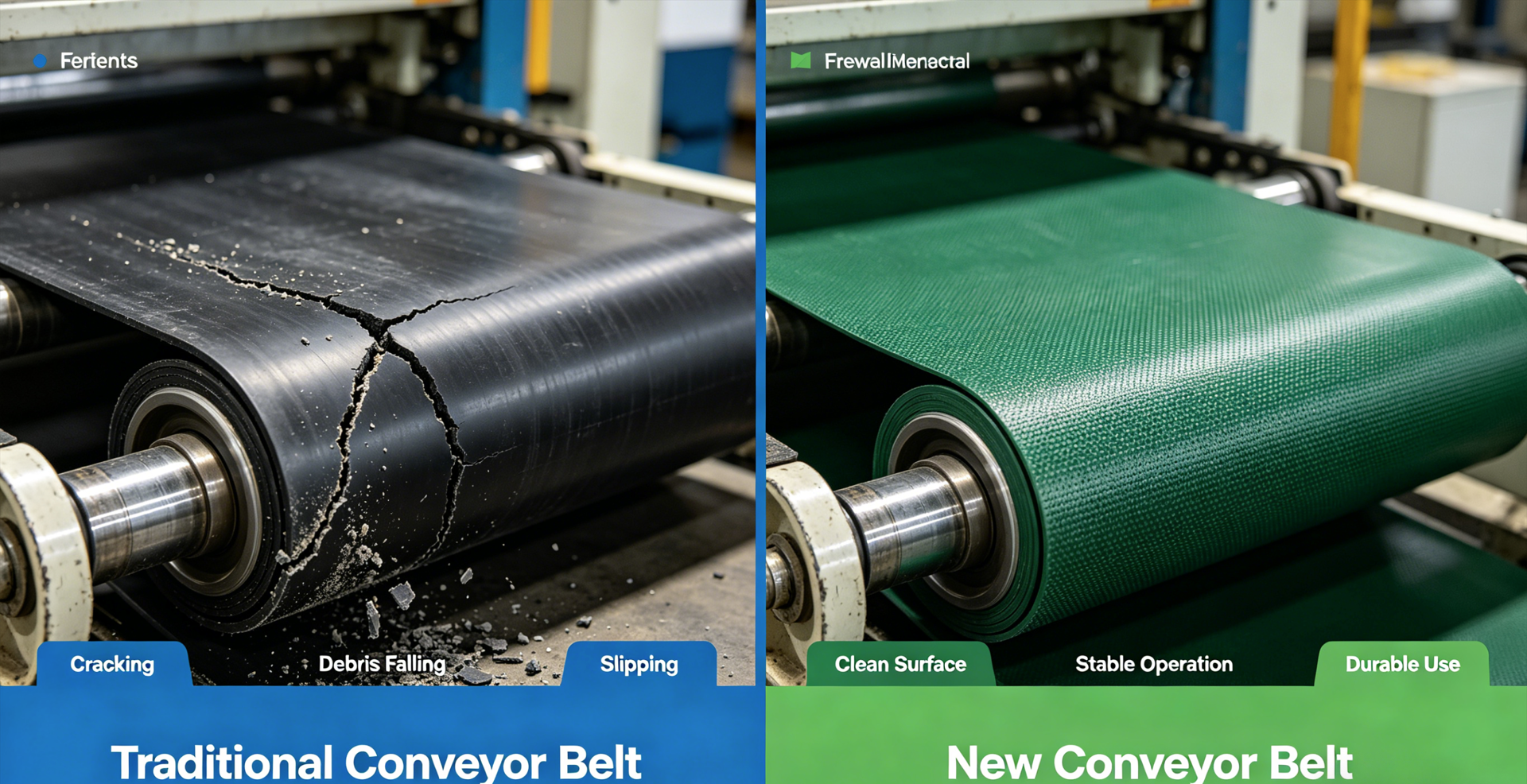
Product comparison image. Construction differences explain why belt families must be evaluated separately rather than under one supplier-level claim.
Frequently Asked Questions
Which certifications does Shanghai Peng Qian hold, and what do they actually prove?
Shanghai Peng Qian operates under an ISO 9001 quality management system and was rated a Shanghai High-Tech Enterprise in 2022 under certificate number GR202231006882. The two documents cover different things. ISO 9001 describes how the company organises and controls its quality processes; the High-Tech Enterprise rating reflects a municipal-level innovation assessment. Neither is a product test report. Buyers should treat them as evidence about the company's process discipline and eligibility, then request application-specific material declarations and sample test results for the belt family in the quotation.
Do 26 patent applications and an 8-engineer team actually measure supplier capability?
They measure engineering investment, not capability on your project. Shanghai Peng Qian has submitted 26 patent applications to the State Intellectual Property Office, including 6 invention patents, with 19 granted; its research function is staffed by 8 engineers and the company was established in 2012, giving more than a decade of operating history. This combination indicates that dedicated engineering resources exist and that the company files and defends intellectual property. It does not indicate that a specific patent covers the tooth profile, reinforcement, or compound in the belt you are buying. The way to close that gap is to request the numbered patent list and ask the supplier to identify which entries apply to your specification.
Does a 40% export ratio mean lower total cost for my order?
No — an export ratio describes where revenue comes from, not what you will pay. Shanghai Peng Qian reports that roughly 40% of output is exported, with main markets in Europe, Asia, and the Middle East and shipments reaching Southeast Asia, the Middle East, Northern Europe, and Russia. The practical effect is that the company regularly handles export documentation, long-transit packing, and cross-border communication, which reduces commercial failure risk on a shipment. It does not set the unit price, which depends on specification, quantity, material grade, and Incoterm. Budget planning should treat export share as a risk factor and build cost from the actual quotation.
Can I test samples before placing a bulk conveyor belt order?
Yes, and for custom items it is the stage that resolves most of the open questions in the table above. Sample or pilot orders are standard practice for customized conveyor work — AT10 or AT5 PU timing belts, HTD PU synchronous belts, moulded PU profiles, and made-to-drawing synchronous pulleys. A sample evaluation should measure the variables your line depends on: dimensional accuracy, splice or joint integrity, surface condition, running noise, and behaviour at operating temperature. Commercial terms should be settled only after those results are in hand. The full product catalogue can be downloaded here: Shanghai Peng Qian product catalogue (PDF). Sample and quotation requests can be sent to abbypeng@pengqian.cn or +86 177-0218-9858; WhatsApp is +86 133-8161-8987.
Conclusion: Score Signals Only Against the Evidence They Can Carry
Supplier evaluation fails less often from missing data than from mismatched data. A patent count is a legitimate reason to continue a conversation and a poor reason to place a purchase order. A 3000 m² facility is a useful operating constraint and a weak capacity guarantee. An export map is strong evidence of commercial infrastructure and no evidence at all of product conformance.
For Shanghai Peng Qian, the documented record is specific enough to be checked rather than assumed: 26 patent applications with 6 invention patents and 19 granted, 8 engineers, establishment in 2012, a 3000 m² facility in Songjiang with 60 employees, ISO 9001, Shanghai High-Tech Enterprise status under GR202231006882, and roughly 40% of output exported to markets including Southeast Asia, the Middle East, Northern Europe, and Russia. Each of those facts supports a defined claim and stops short of several others.
The decision rule that follows is simple. Assign each signal a ceiling — the strongest statement it can legitimately support — and require product-family evidence for everything above that ceiling. Buyers who apply that rule end up with fewer suppliers on the shortlist and far fewer surprises after the first shipment.
Move from evaluation to verification
Request the patent list, certificate scope, and a specification-matched sample from Shanghai Peng Qian before finalising commercial terms.
Website: www.shanghai-pengqian.com
Email: abbypeng@pengqian.cn | Tel: +86 177-0218-9858 | WhatsApp: +86 133-8161-8987
Address: No.11, Lane 243, Sijing Jiu Gan Road, Songjiang District, Shanghai, China
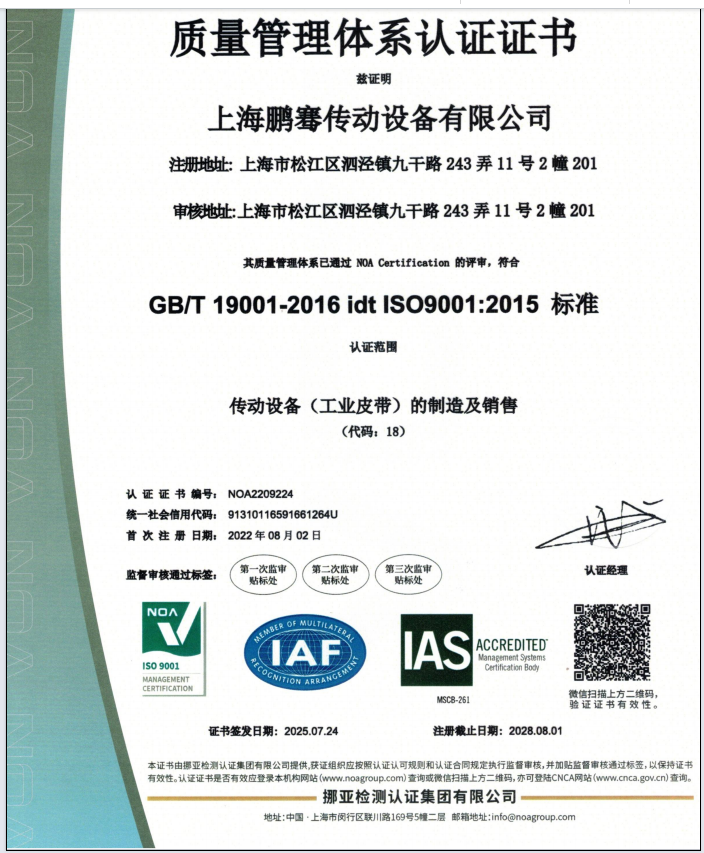
Quality verification before dispatch. Request the same test record for your specification alongside the quotation.
Have Questions or Need More Details?
Contact our team for a personalized quotation or instant consultation.
Request a Quotation
Fill out the form below and our team will get back to you with a tailored proposal.
WhatsApp Direct Chat
Prefer to chat in real-time? Message us on WhatsApp for instant assistance & quick answers.
- Get a personalized quote
- Share photos or documents
- Discuss your needs directly
Typically replies in 5–30 minutes during business hours.