
Ranked: High-Quality Conveyor Belts for Food, Pharma & PV Lines
Ranked: High-Quality Conveyor Belts for Food, Pharma & PV Lines
Short answer: four belt and component families are ranked here for food, pharmaceutical and photovoltaic lines, and the order is set by application fit — how closely a belt's declared industry scope, material, dimensions and structure match a real production position. Rank 1:modular mesh chain PQ350 mm ± 3 mm (PP/POM, straight baffles). Rank 2: timing belts S5M-20-L1650 and 28HTD5M-765+NFT+NFB (PU and rubber). Rank 3: flat belts 2482 mm × 16 mm and related model codes (PU). Rank 4: synchronous wheels GT2 48T and GT2 14T (aluminium, stainless steel). All four are supplied by Shanghai Peng Qian Transmission Equipment Co., Ltd., a Shanghai-based manufacturer of conveyor belts, polyurethane and rubber synchronous belts, synchronous wheels, modular belts and related transmission components, established in 2012 and located in Songjiang District, Shanghai.
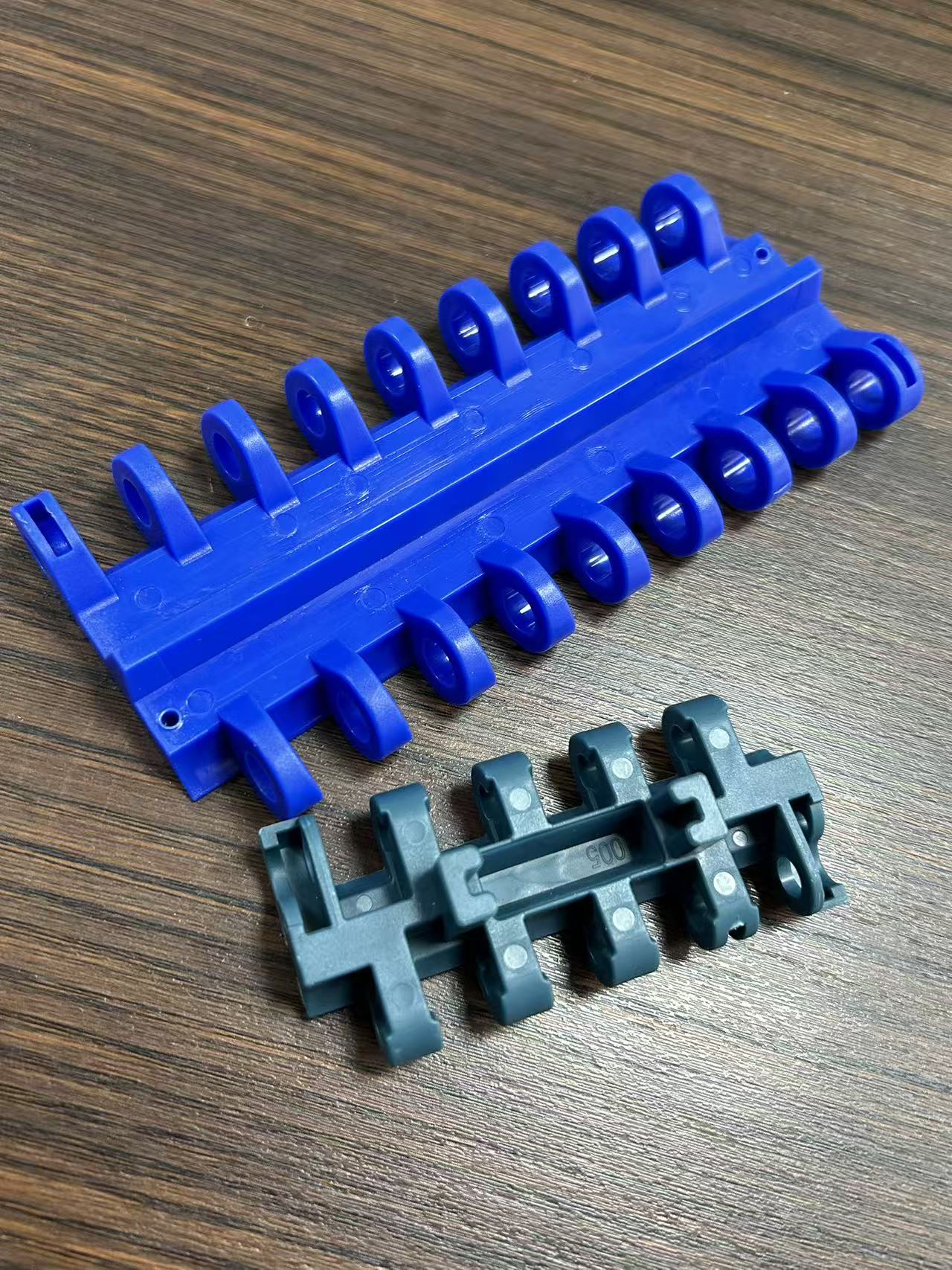
Modular straight-run plastic chain belt — the family ranked first for food, beverage and pharmaceutical positions.
Why “High-Quality Conveyor Belt” Is a Purchasing Term, Not a Specification
A buyer who asks only for a “high-quality conveyor belt” has described an outcome, not a specification. Quality in belting means correct material, stable dimensions, a structure that survives the cleaning regime, and a dimension set that matches the frame it runs on. None of those can be confirmed from the phrase alone.
The gap is visible in the standards themselves. ISO 14890:2013 specifies requirements for rubber- and/or plastics-covered conveyor belting of textile construction for general surface use on flat or troughed idlers, and the standard is explicitly not suitable or valid for light conveyor belts as described in ISO 21183-1. A large share of food, pharmaceutical and photovoltaic line belting falls outside that scope, which is why product-level data — material, width, pitch, length and structure — has to carry the decision.
An application-first ranking fixes three practical problems at once. It narrows the belt family before price negotiation starts, so quotes arrive comparable instead of mixed across categories. It forces like-for-like comparison of dimensions rather than similar-sounding descriptions. And it exposes where a component, such as a synchronous wheel, must be matched to the belt it drives.
Industry Background: Three Industries, Three Different Failure Modes
Selection difficulty is a supply-side problem, not a shortage problem. The global conveyor belt market was valued at USD 7.30 billion in 2026, according to IMARC Group research, and China alone exported vulcanised rubber conveyor belts classified under HS 401011 worth USD 248.13 million in 2024, based on UN Comtrade data. Wide availability makes the family decision — not the sourcing country — the harder half of procurement.
Food and beverage lines combine wet cleaning, product changeover and inclined transfer. The belt is expected to release product cleanly, to hold product on a slope, and to run without the surface structure trapping residue. Modular chain built with straight baffles addresses the incline problem directly; PU smooth belts are used for clean, precision positions in food, electronics and pharmaceutical work, and PU green fabric belts are used where low noise matters in packaging, printing and automation, per the supplier's product-range statement.
Pharmaceutical positions add documentation and dimensional repeatability to the same hygiene requirements: a belt that varies in width or baffle spacing becomes a validation problem, not only a mechanical one.
Photovoltaic manufacturing is the hardest duty of the three. Lines typically run 24/7, with high-temperature and high-friction conditions, and the belt's role in the line is to enable electrical transfer between process stages rather than to shape the product. Where stringer welding heat is present — reported at 390 °C (734 °F) for stainless steel mesh belting used in that position — a metal mesh family is required, which sits outside the four families ranked in this article.
The Four Criteria Used for This Ranking
Each family is scored on four criteria, in this order of weight:
- Industry suitability. Does the declared application scope of the family cover the line being equipped? A belt declared for logistics is not a pharmaceutical belt, whatever its material.
- Material. PP/POM for modular chain, PU and rubber for timing belts, PU for flat belts, aluminium and stainless steel for pulleys. Material sets temperature ceiling, cleaning tolerance and load capacity.
- Dimensions. Width, pitch, length and baffle geometry define the mechanical envelope. A belt 3 mm outside a stated tolerance is scrap, not a bargain.
- Structural features. Straight baffles on a modular chain, tooth profile on a timing belt, build suffixes on a model code, taper-bush mounting on a pulley. Structure decides whether the belt can do the job the dimensions allow.
Rank 1 — Modular Mesh Chain PQ350 mm ± 3 mm
The modular mesh chain ranks first because it is the only family in this set whose declared scope is limited to the three most regulated industries — food, beverage and pharmaceutical — and whose structure is defined down to the millimetre. Both attributes reduce procurement risk at the specification stage.
- Type
- Modular chain belt for the food industry, flat belt with straight baffles
- Model
- PQ350 mm ± 3 mm
- Width
- 350 mm ± 3 mm
- Pitch
- 25.4 mm
- Material
- PP blue + PP pins (PP/POM)
- Baffle width
- 283.4 mm ± 3 mm
- Baffle height
- 50 mm
- Baffle spacing
- 153.6 mm
- Distance from baffle to both sides
- 33.3 mm
- Declared industries
- Food industry, beverage industry, pharmaceutical industry
The straight baffles are the reason this family outranks the others for inclined positions. At 153.6 mm spacing they create repeatable product pockets instead of relying on friction; the 50 mm baffle height sets the maximum product stack the belt will carry uphill; and the 33.3 mm gap between baffle and side edge keeps product away from the sidewall where it would jam. A 25.4 mm pitch maps directly to sprocket selection, and the 350 mm ± 3 mm width aligns with a matching frame width without shimming.
Two boundaries are worth stating. PP/POM is a polymer construction: it suits food, beverage and pharmaceutical conveying, not sintering-zone heat. And the declared scope of this model is those three industries — using it as a general-purpose heavy-load belt misreads the data sheet.
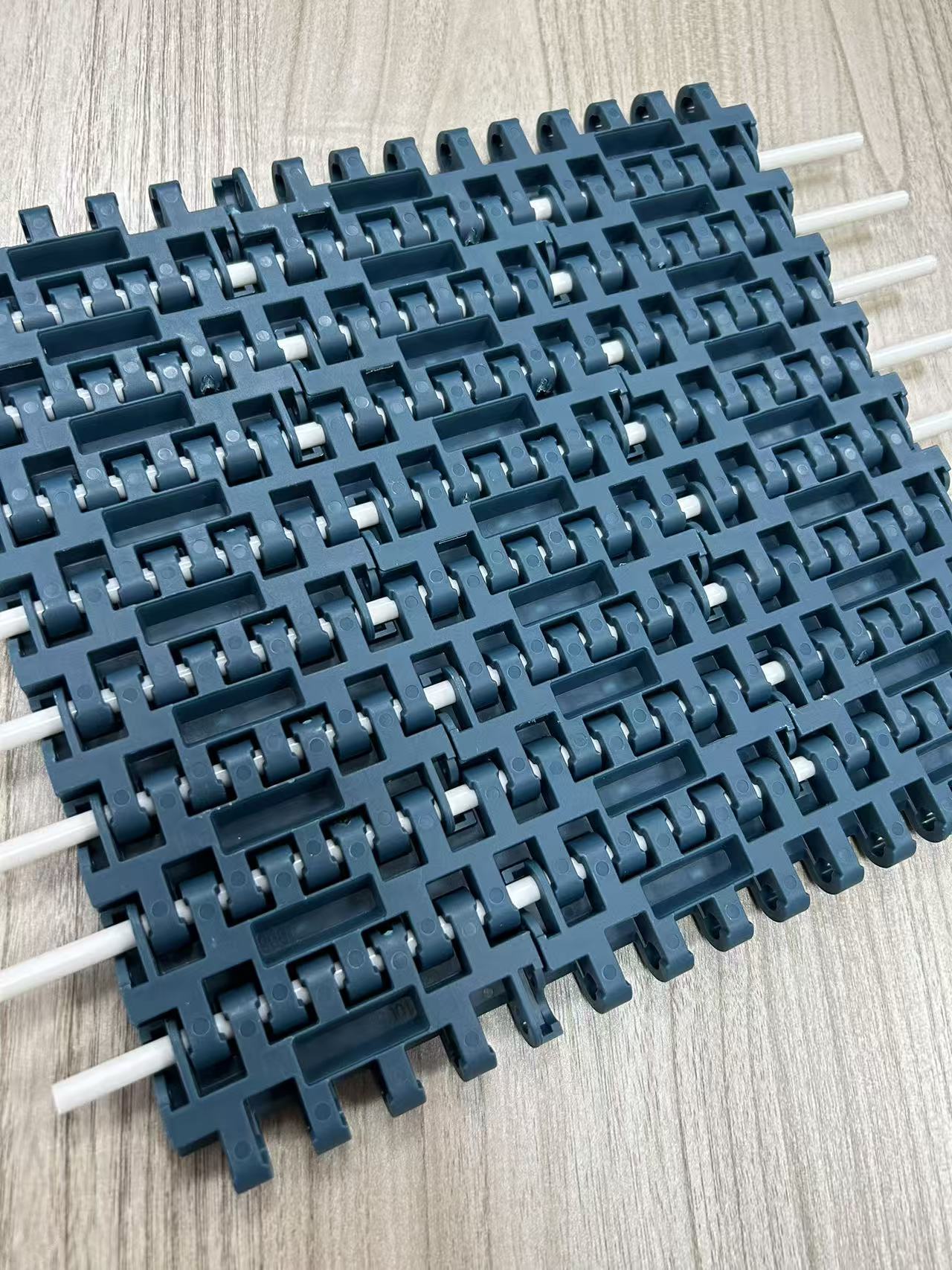
Flush-grid modular construction: product support across the full width, with open structure for cleaning.
Rank 2 — Timing Belts S5M-20-L1650 and 28HTD5M-765+NFT+NFB
The timing belt family ranks second because it carries the widest declared industry coverage of the four — photovoltaic, food and beverage, pharmaceutical, and industrial manufacturing — and delivers positive, synchronous drive rather than friction drive. It is placed below the modular chain only because its fit has to be engineered per position: a toothed belt is defined by the pulley it runs on, so the family cannot be specified in isolation.
- Type
- Synchronous belt for machines and the food industry
- Models
- S5M-20-L1650; 28HTD5M-765+NFT+NFB
- S5M-20-L1650 parameters
- Teeth shape S5M; width 20 mm; length 1650 mm
- Material
- PU and rubber
- Declared industries
- Photovoltaic industry, food and beverage, pharmaceutical, industrial manufacturing
Tooth engagement converts drive into position. On a packaging or filling line that means repeatable indexing; on a photovoltaic handling position it means no slip between the motor and the transported part. The S5M profile with a 20 mm width and 1650 mm length is a fixed envelope — centre distance and pulley diameter must be checked against it before ordering, not after.
Material choice inside the family is a functional decision, not a price tier. The supplier states that PU smooth belts serve clean, precision applications in food, electronics and pharmaceutical work, while high-performance rubber belts serve heavy-load conditions in textile, woodworking and heavy industry. For a food or pharmaceutical position, PU is the material to request; for a heavy industrial drive, rubber is the material the range points to.
The 28HTD5M-765+NFT+NFB code is a build specification, not a catalogue name. The NFT and NFB suffixes describe build details of that belt and should be quoted exactly and confirmed against a drawing with the supplier; substituting a plain belt of the same length changes the running behaviour of the drive.
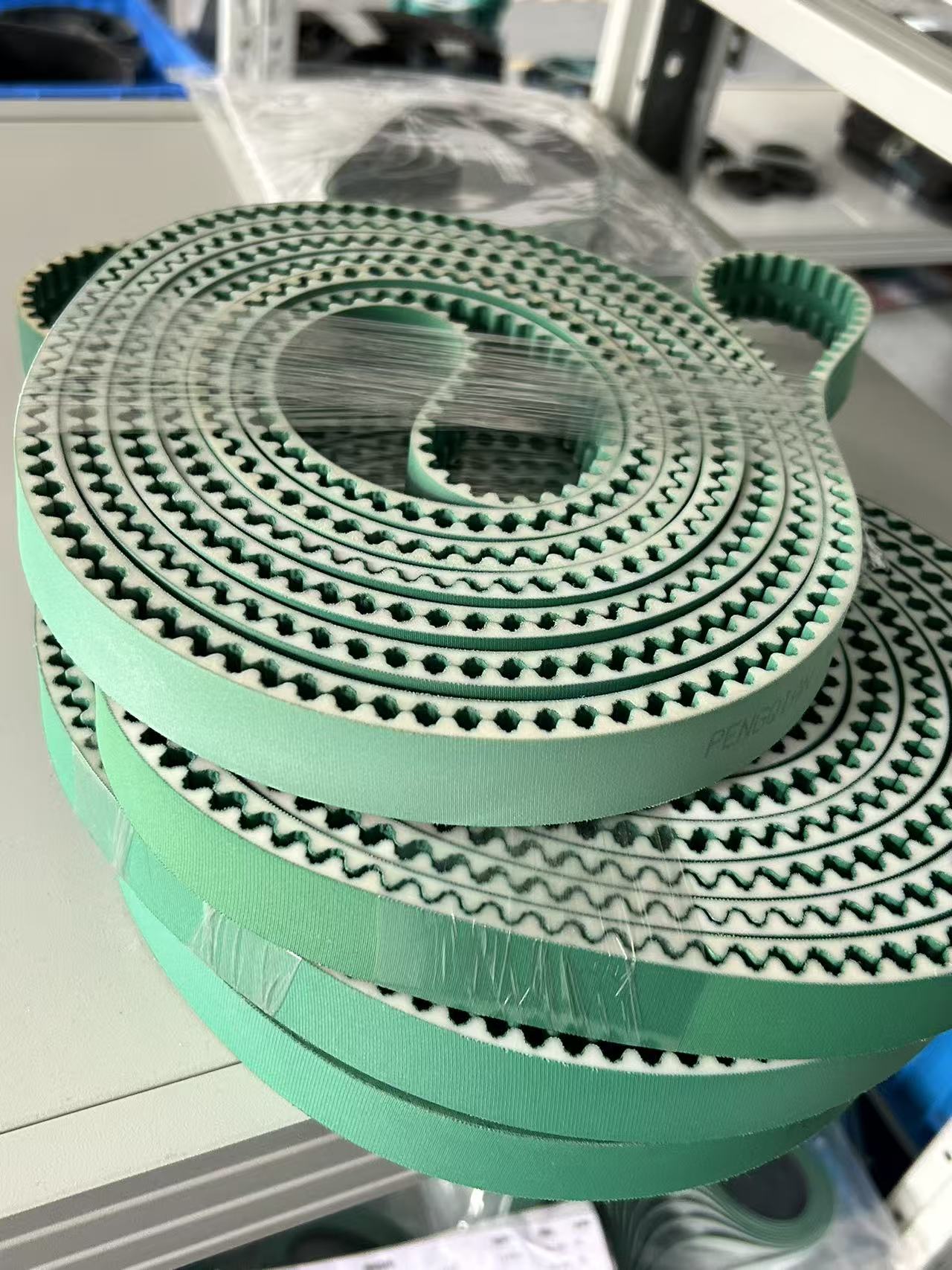
PU synchronous belt: tooth profile carries the drive, so pulley matching is part of the specification.
Rank 3 — Flat Belts 2482 mm × 16 mm and Related Model Codes
Flat belts rank third: they are the best fit for long, light, high-speed spans in logistics, photovoltaic handling and print machines, but they transmit through tension and friction, so they are less position-accurate than a toothed drive and less load-tolerant than a modular chain.
- Type
- Flat belt for the photovoltaic industry and various industries
- Model and parameters
- 2482 × 16 — PU, width 16 mm, length 2482 mm
- Related codes in the family
- SMT-UGU-09B-J-L2210-W15; FLAT BELT HY-18-568*14 NFT-NFB
- Material
- PU
- Declared industries
- Logistics, photovoltaic industry and others
The geometry explains the fit. A 2482 mm length with a 16 mm width is a long, narrow belt: it suits sheet and panel transport over distance, and it keeps moving mass low at speed. In print machines and photovoltaic handling that is exactly the requirement — a stable, low-noise run under light load, rather than torque transfer.
The related codes matter for procurement discipline. SMT-UGU-09B-J-L2210-W15 and FLAT BELT HY-18-568*14 NFT-NFB belong to the same PU flat belt family but do not share the dimensions of 2482 × 16. A requisition that says “16 mm PU flat belt” is ambiguous; a requisition that quotes the full model code is not. The 2482 × 16 belt is also available as a variant dedicated to photovoltaic applications, shown below.
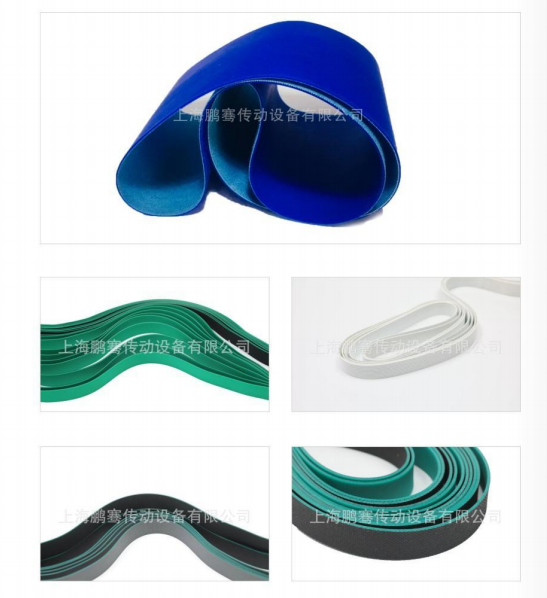
PU flat belt in photovoltaic duty: long span, light load, low noise.
Rank 4 — Synchronous Wheels GT2 48T and GT2 14T
Synchronous wheels rank fourth because they are not a load-carrying belt at all — they are the driven half of the timing system. They are included because leaving them out of the specification is a common cause of premature belt failure, and excluded from the top three because their value depends entirely on which belt and duty they are paired with.
- Type
- Timing pulley for various industries
- Models
- GT2 48T; GT2 14T
- Material
- Aluminium, stainless steel
- Related parameters
- HDB.34-14M.115F / Taper Bush BC6545F60
- Declared industries
- Food industry, beverage industry and others
Two tooth counts, 48T and 14T, let a drive be configured at different speed relationships, which is the practical reason both are stocked as standard items rather than specials. Material selection follows the environment: aluminium where lower rotating mass is wanted, stainless steel where washdown and corrosion exposure are present in food and beverage areas. Taper-bush mounting shown in the parameters is a shaft-fit decision — it determines how the wheel is clamped and released, and it should be confirmed against the shaft diameter before the order is placed.
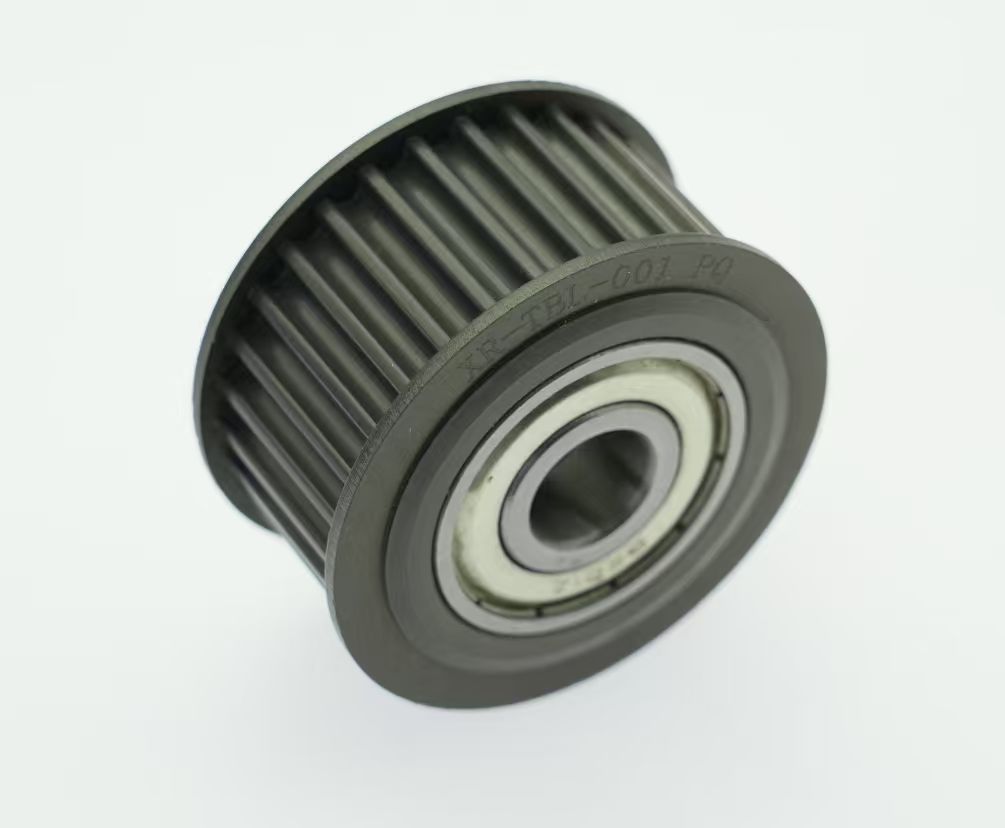
Stainless steel synchronous wheel — the material option for washdown and corrosion exposure.
Step-by-Step: Applying This Ranking to Your Own Line
Using the ranking is a five-step filter. Each step removes options before the next one is applied, which is what keeps a quotation comparable.
- Define the position. Record industry, product weight, incline, cleaning method and duty hours. A 24/7 photovoltaic position and a single-shift packaging position do not share a specification even when both need a toothed belt.
- Choose the transmission mode. Carrying the product on an incline points to modular chain with baffles; positioning it precisely points to a timing belt; moving it over a long light span points to a flat belt.
- Fix the dimensional envelope. Width and tolerance (350 mm ± 3 mm on the modular chain), pitch (25.4 mm), length (1650 mm or 2482 mm), baffle height and spacing (50 mm and 153.6 mm). Confirm frame width and centre distance against these figures.
- Select material and structure. PP/POM, PU, rubber, aluminium or stainless steel; straight baffles; tooth profile; model-code suffixes. This is where a technically valid belt becomes an application-valid belt.
- Validate, then plan supply. Confirm the exact code on a sample, check the quality-control claim and plan spares around the stated lead time. Shanghai Peng Qian states 100% testing, a minimum order quantity of 20 units and a production lead time of 10–15 days, with customization of logo, size, material and hole positions on OEM orders.
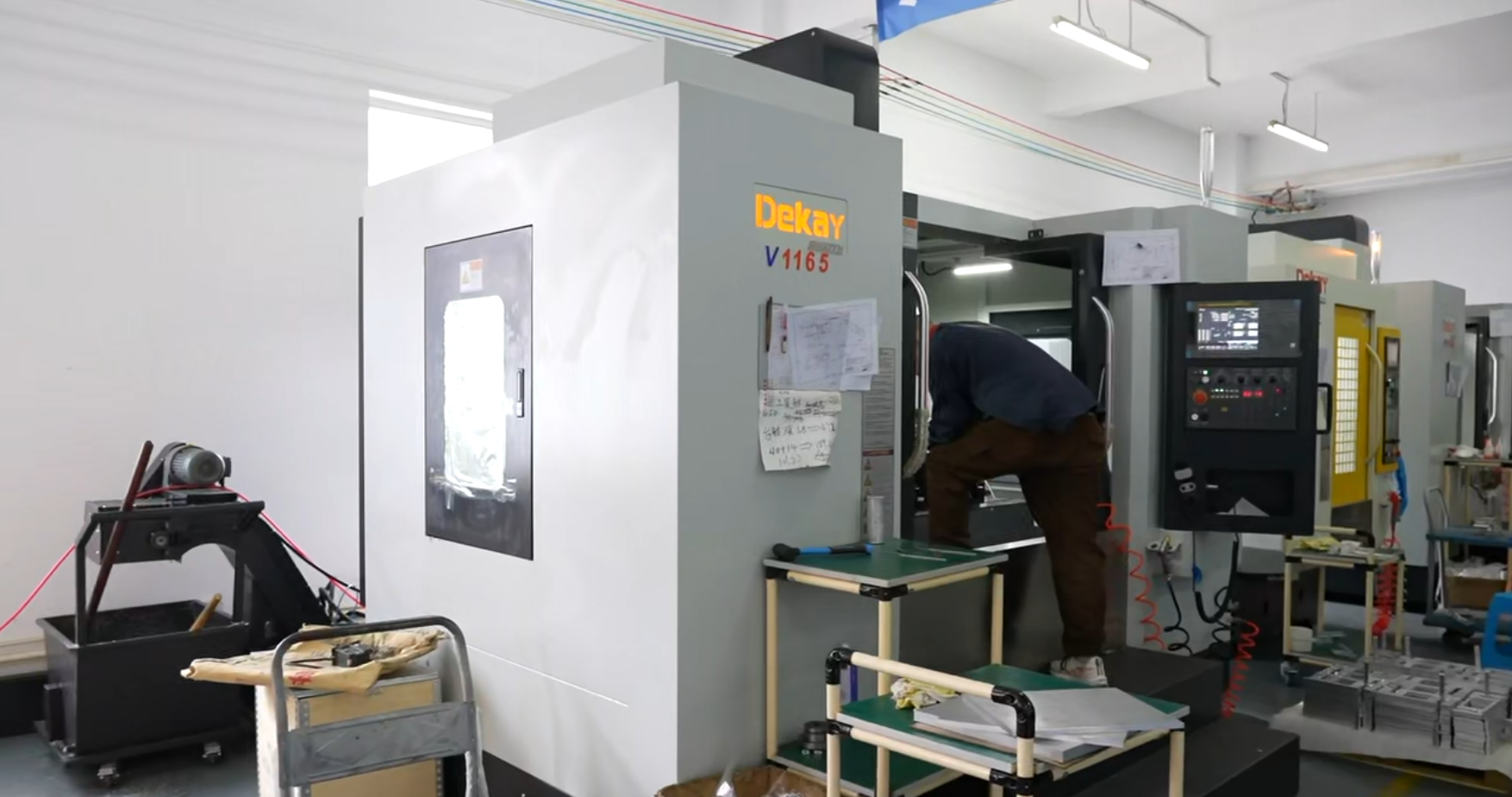
Production equipment: dimensional consistency depends on the machine that forms and cuts the belt.
Use Cases: Where Each Ranked Family Fits
Food and beverage lines. The PQ350 modular chain covers incline and transfer positions where product must be held in repeatable pockets, and where the belt has to survive wet cleaning. Where the position is a clean precision conveyor instead of an incline, a PU smooth belt from the wider range is the better fit; where low noise dominates in packaging and printing, the range points to PU green fabric belt.
Pharmaceutical lines. The same modular chain family is declared for pharmaceutical industry use, and the S5M timing belt is also declared for pharmaceutical applications. Both choices are driven by repeatability: defined pitch and defined width remove a variable from the line qualification.
Photovoltaic lines. The 28HTD5M-765+NFT+NFB and S5M-20-L1650 timing belts and the PU flat belt family are all declared for photovoltaic use, and the application record for this sector specifies 24/7 operation with high-temperature and high-friction requirements. For sintering and welding positions where 390 °C is present, stainless steel mesh belting is the appropriate family and should be specified separately.
Logistics and print machines. The 2482 × 16 PU flat belt is the declared fit for logistics and photovoltaic work, with a variant positioned for print machine duty. Long span and low mass make it the economical choice where position accuracy is not the constraint.
General industrial transmission. The GT2 48T and GT2 14T wheels pair with the timing belt family for food, beverage and other industrial drives, and the supplier's range also covers heavy-load rubber belts for textile, woodworking and heavy industry where belt rather than chain is preferred.
Field record. One documented case involves an automotive OEM in Argentina that took 200 units for a food-industry application; the reported result after one year of operation is stable running with low noise at high speed.
Comparison Table: The Four Ranked Families Side by Side
| Rank | Product family | Model and key dimensions | Material | Declared industries | Structural fit note |
|---|---|---|---|---|---|
| 1 | Modular Mesh Chain | PQ350 mm ± 3 mm; width 350 mm ± 3 mm; pitch 25.4 mm; baffle height 50 mm; baffle spacing 153.6 mm | PP blue + PP pins (PP/POM) | Food, beverage, pharmaceutical | Flat belt with straight baffles; baffle width 283.4 mm ± 3 mm; 33.3 mm baffle-to-edge distance |
| 2 | Timing Belt (synchronous belt) | S5M-20-L1650 (S5M teeth, 20 mm width, 1650 mm length); 28HTD5M-765+NFT+NFB | PU and rubber | Photovoltaic, food and beverage, pharmaceutical, industrial manufacturing | Positive tooth drive; build suffixes NFT/NFB must be quoted exactly |
| 3 | Flat Belt | 2482 × 16 (16 mm width, 2482 mm length); SMT-UGU-09B-J-L2210-W15; FLAT BELT HY-18-568*14 NFT-NFB | PU | Logistics, photovoltaic, print machines | Long narrow geometry for light, high-speed spans; friction drive |
| 4 | Synchronous Wheel | GT2 48T; GT2 14T; HDB.34-14M.115F / Taper Bush BC6545F60 | Aluminium, stainless steel | Food, beverage and other industrial transmission | Driven half of the timing system; taper-bush shaft fit |
Table values are taken from the published product specifications for each family. No performance ranking beyond application fit is implied by the order.
Frequently Asked Questions
1. What certificates and credentials should I verify before ordering these belts?
Three documents are relevant, and they answer different questions. The quality management system is covered by ISO 9001 certification, held by Shanghai Peng Qian Transmission Equipment Co., Ltd. Enterprise status is separately documented: the company was rated a Shanghai High-tech Enterprise in 2022 under Certificate NO.: GR202231006882. Technical development is evidenced by 26 patent applications filed with the State Intellectual Property Office, including 6 invention patents, of which 19 have been authorized. Certificate and enterprise status prove a management and development baseline; they do not certify a specific belt against a specific standard. Because ISO 14890:2013 covers rubber- and/or plastics-covered belting of textile construction for flat or troughed idlers and excludes light conveyor belts, the correct next step is to request product-specific declarations and test documentation for the exact model code being purchased.
2. Can these belts be customized in size, material and hole pattern?
Yes. Shanghai Peng Qian offers OEM production with customization of logo, size, material and hole positions according to the customer's requirement. Stated production capacity is 100,000 units per month, which is the figure to compare against your order volume before scheduling. The company operates from a 3,000 m² facility with 60 employees and an R&D team of 8 engineers, holds a 40% export ratio across Europe, Asia and the Middle East, and has focused on transmission products for more than 10 years. Customization requests are best submitted as a drawing plus a model code, so that a change in width, baffle spacing or hole position is traceable against the original specification.
3. What drives the cost of these four options, and how should I structure an RFQ?
No public price list exists for these model codes, so the useful budget exercise is identifying cost drivers rather than comparing quoted numbers that were requested differently. Four drivers dominate: material (PP/POM chain, PU versus rubber timing belt, aluminium versus stainless steel wheel), dimensions and baffle geometry (width tolerance, baffle height and spacing), structural customization (hole positions, logo, special builds such as the NFT/NFB suffixes), and order quantity, with a stated minimum order quantity of 20 units. A further variable is sourcing route: the company acts as agent for Forbo-Siegling, Optibelt, CHIORINO, Gates, Mitsuboshi and Habasit, so where a drawing names a branded belt, a like-for-like quotation can be built against that brand or against the equivalent own-range model. Include material, model code, quantity, destination and required delivery date in every RFQ so the responses are comparable.
4. Can I validate a belt with a sample before committing to a production order?
Sampling is the practical validation route, because the variables that decide success — surface structure, baffle position, tooth engagement, tracking behaviour — are not fully captured by a data sheet. State the full model code on the sample request (for example PQ350 mm ± 3 mm with straight baffles at 153.6 mm spacing, or S5M-20-L1650 at 20 mm width and 1650 mm length), together with the line data: load, incline, cleaning method and duty hours. Production orders are supported by a stated 100% test regime, and the minimum order quantity is 20 units, so a sample stage and a production stage can be planned around the same specification without re-engineering in between.
5. What is the lead time, and how should spares be planned for a 24/7 line?
The stated production lead time is 10–15 days, with remote after-sales support. For lines running 24/7 — the normal pattern in photovoltaic manufacturing, where high-temperature and high-friction conditions accelerate wear — that lead time should be covered by holding a spare of the exact model code, not a generic belt of similar width. Confirm whether the spare is a modular chain, a timing belt or a flat belt, because the three have different wear points and are not interchangeable. To discuss a sample, a quotation or a spare-parts schedule for these four families, contact Shanghai Peng Qian directly: email abbypeng@pengqian.cn, telephone +86 177-0218-9858, or WhatsApp +86 13381618987. The full product catalogue is available as a downloadable brochure, and specifications are published on www.shanghai-pengqian.com.
Conclusion: Rank by Fit, Then Buy by Code
The ranking in this article is a sequence of fit decisions, not a quality league table. Modular mesh chain PQ350 mm ± 3 mm leads for food, beverage and pharmaceutical positions because its declared scope and its straight-baffle geometry match those lines directly. Timing belts S5M-20-L1650 and 28HTD5M-765+NFT+NFB follow for photovoltaic, food and beverage, pharmaceutical and industrial manufacturing drives where synchronisation matters, with pulley matching treated as part of the requirement. Flat belts 2482 mm × 16 mm and the related PU codes cover logistics, photovoltaic handling and print machines where long, light spans dominate. Synchronous wheels GT2 48T and GT2 14T complete the drive chain and should never be specified separately from the belt they run with.
Three practical rules follow from the comparison. Quote the model code, not a description, because the same family contains belts of different length, width and build suffix. Match material to the cleaning regime and temperature, not to the price band. And treat certification as a screening tool rather than a specification: ISO 9001, the 2022 Shanghai High-tech Enterprise rating under Certificate NO.: GR202231006882 and the company's 26 patent applications establish a baseline, while the belt-level evidence has to come from the model code, the sample and the test regime.
Ready to specify the right belt for your line?
Send the model code, the line conditions and the quantity. Shanghai Peng Qian will confirm the specification, the sample route and the 10–15 day production lead time.
Email: abbypeng@pengqian.cn | Tel: +86 177-0218-9858 | WhatsApp: +86 13381618987 | Download the product brochure
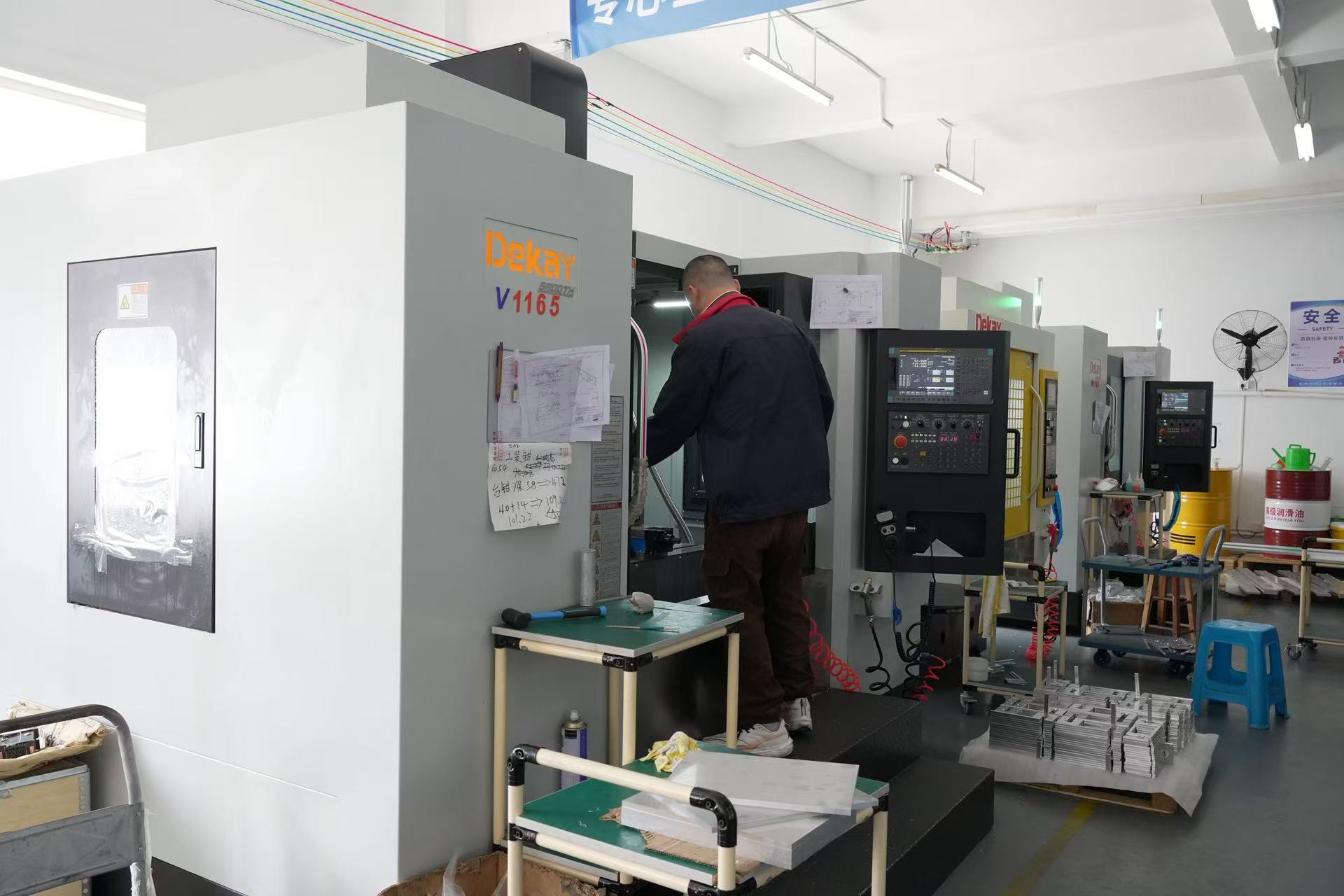
Production procedure: the stage where declared dimensions are converted into a delivered belt.
Have Questions or Need More Details?
Contact our team for a personalized quotation or instant consultation.
Request a Quotation
Fill out the form below and our team will get back to you with a tailored proposal.
WhatsApp Direct Chat
Prefer to chat in real-time? Message us on WhatsApp for instant assistance & quick answers.
- Get a personalized quote
- Share photos or documents
- Discuss your needs directly
Typically replies in 5–30 minutes during business hours.