
Top 5 High-Quality Conveyor Belts for Industrial Manufacturing
Top 5 High-Quality Conveyor Belts for Industrial Manufacturing: Expert Ranking and Selection Rationale
Selecting a conveyor belt for industrial manufacturing is rarely a single-product decision. A line that indexes parts at speed needs a synchronous belt; a line that carries panels or parcels needs a flat belt; a line that washes and conveys food needs a modular mesh chain. This article ranks five high-quality conveyor belt families supplied by Shanghai Pengqian Transmission Equipment Co., Ltd. — a transmission equipment manufacturer established in 2012 in Songjiang District, Shanghai — and explains the ranking rationale using documented material properties, model numbers and target industries.
The ranking is an editorial, fit-for-purpose assessment. Belt families are ordered by how completely their documented function, material and target industries match common industrial manufacturing tasks. It is not a claim that one belt outperforms every alternative in every line, and it is not a competitor ranking.
Five criteria set the order: function (positive-drive transmission versus friction conveying), material behaviour (PU, rubber, PP/POM or silicone), documented geometry (tooth profile, width, length, pitch, baffle layout), documented industry fit, and verifiability (compliance documents, customisation scope and pre-shipment testing).
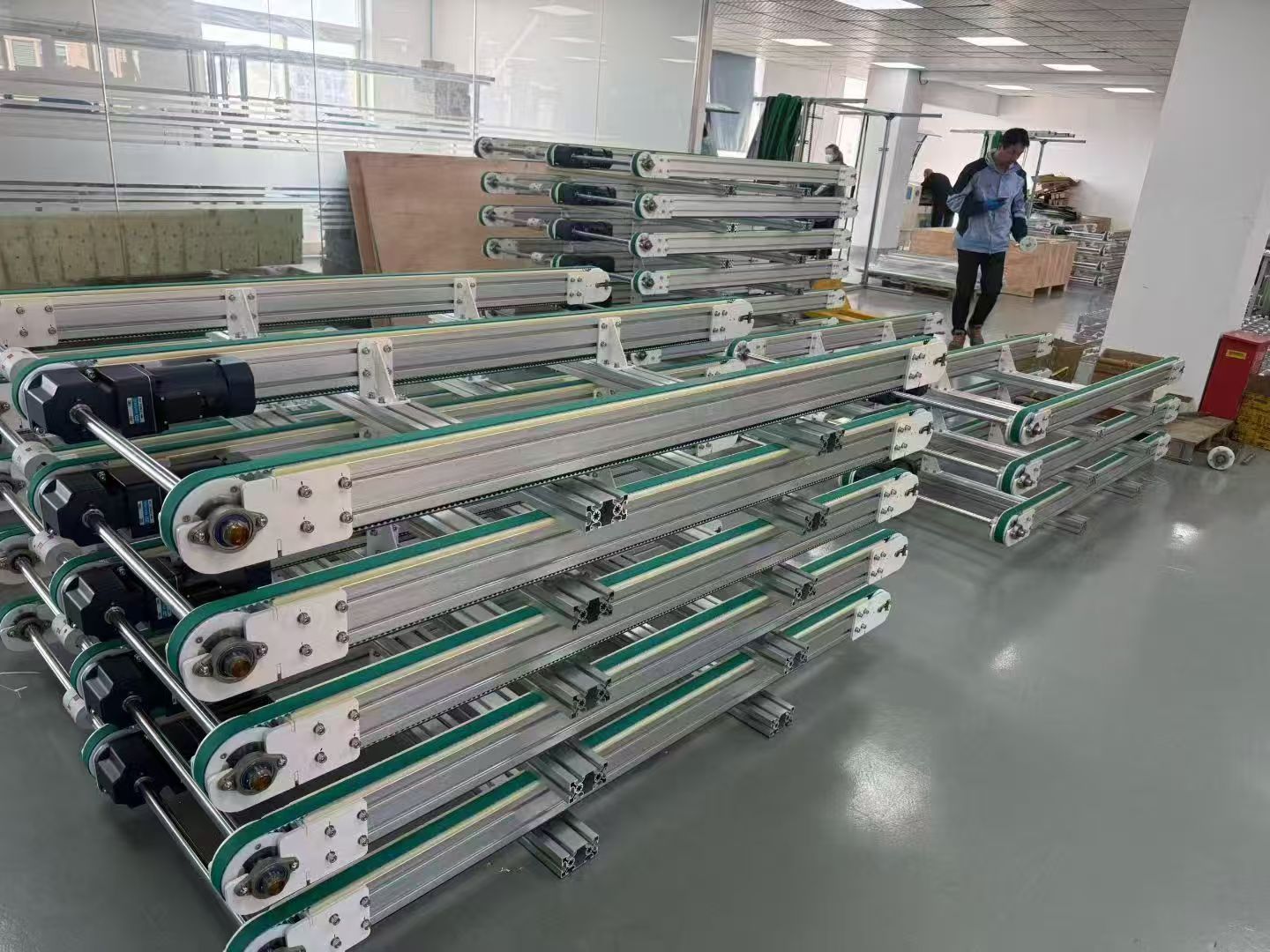 High-quality conveyor belt products from the manufacturer's range, including PU flat belts, synchronous belts, modular mesh chains and synchronous wheels.
Problem Definition: Why Belt-Family Choice Decides Line Performance
Most belt-related production problems are decided before the purchase order is issued. Three parameters are fixed at specification stage and are difficult and expensive to correct afterwards: the drive concept, the material, and the geometry.
- Drive concept. Positive-drive synchronous belts transmit motion through tooth engagement, while flat belts and modular belts typically carry product on a moving surface. Specifying a conveying belt where indexing accuracy is required — or a synchronous belt where only transport is needed — produces either accuracy loss or avoidable cost.
- Material. PU, rubber, PP/POM and silicone behave differently in abrasion, cleaning and temperature terms. Material choice is what decides whether a belt is suitable for food, pharmaceutical, photovoltaic or general industrial manufacturing environments.
- Geometry. Tooth profile, width, length, pitch and baffle layout must match the machine, not the other way round. A model such as S5M-20-L1650 is defined by exactly these parameters, which is why the ranking below quotes models rather than categories alone.
A second, less visible problem is traceability. Buyers working in the Evaluation-to-Execution stage need documents rather than adjectives: which standard the belt is tested against, which quality management system the factory operates, whether customisation is genuinely available, and how minimum order quantity and lead time are structured. This article addresses both problems — the ranking answers "which belt family fits", while the decision steps and the FAQ answer "how do I verify it before committing".
Industry Background: Market and Compliance Signals Behind Belt Procurement
Third-party market research provides scale context, and it also illustrates why a single figure should not be treated as definitive. Intel Market Research values the global conveyor belt market at USD 8.11 billion in 2024, projected to reach USD 9.73 billion by 2032. Estimates vary with research scope: Mordor Intelligence reports USD 5.84 billion for 2025, and Market Research Future reports USD 8.29 billion for 2024 — a divergence that largely reflects whether whole conveying systems or belts alone are counted.
Within the belt mix, rubber conveyor belts hold an approximately 52.0% share in 2024/2026, a position attributed to high abrasion resistance. The synchronous segment is also substantial: the global industrial synchronous timing belts market was estimated at USD 2.81 billion in 2024, while textile reinforced conveyor belts accounted for over USD 3.42 billion in 2024, favoured for flexibility and strength in mining and construction. Regionally, Asia-Pacific accounted for approximately 46.6% of global conveying equipment revenue in 2025 — a relevant data point for buyers evaluating Chinese manufacturers as part of a normal supply chain rather than as an exception to it.
Compliance is the second structural signal. Industrial conveyor belts must comply with international testing standards such as ISO 283 (tensile strength) and ISO 284 (electrical conductivity), and hygienic belts for food processing are strictly regulated by FDA and EC (European Community) certifications, with EC 1935/2004 cited for food-contact applications. The wider supplier landscape includes established manufacturers such as Continental AG, Fenner Dunlop, Bridgestone, Habasit and Yokohama Rubber.
Shanghai Pengqian Transmission Equipment Co., Ltd. is a manufacturer and distributor of transmission products, producing conveyor belts, polyurethane and rubber synchronous belts, synchronous wheels, rubber seamless belts, silicone belts, string welding machine belts, sintering furnace mesh belts, PEEK belts, sealing rings, chains and modular belts, and acting as an agent for several international belt brands. The company was established in 2012, operates a 3,000 m² facility with 60 employees and an 8-engineer R&D team, and exports around 40% of its output to Europe, Asia and the Middle East. It holds ISO 9001 certification (certificate NOA2209224, issued 2022-08-02 and valid to 2028-08-01, scope: manufacture and sales of transmission equipment / industrial belt) under GB/T 19001-2016 idt ISO9001:2015, and was rated Shanghai High-tech Enterprise in 2022 (Certificate No. GR202231006882). The company has submitted 26 patent applications to the State Intellectual Property Office, 19 of which have been authorised.
The Detailed Solution: Five High-Quality Conveyor Belt Families Ranked
The ranking below covers the belt families documented in the manufacturer's product data. Model numbers, materials and target industries are quoted as published. Where the available data does not specify a value, this article does not supply one.
Rank 1 — S5M-20-L1650 PU Timing Belt (Synchronous Belt)
The S5M-20-L1650 timing belt ranks first because it combines positive-drive transmission with the broadest documented industry coverage in the range. Published parameters are a S5M tooth shape, 20 mm width and 1,650 mm length, with PU and rubber listed as materials. Documented target industries are photovoltaic, food and beverage, pharmaceutical and industrial manufacturing.
Ranking rationale: a synchronous belt transmits motion through tooth engagement rather than friction, which is why it is specified where indexing, positioning or synchronised movement matters. The PU material is the reason the same belt family appears in food, beverage and pharmaceutical applications, where cleanliness and cleaning routines are part of line design. One model covering four industries in the published data is what places it at the top of this list.
Limits to plan for: a synchronous belt is only as accurate as its pulley alignment and tension, so the drive side — the synchronous pulley, also referred to as a timing wheel — must be specified together with the belt. Width is fixed at 20 mm for this model, so wider product or higher load requires a different configuration rather than a modification of this one.
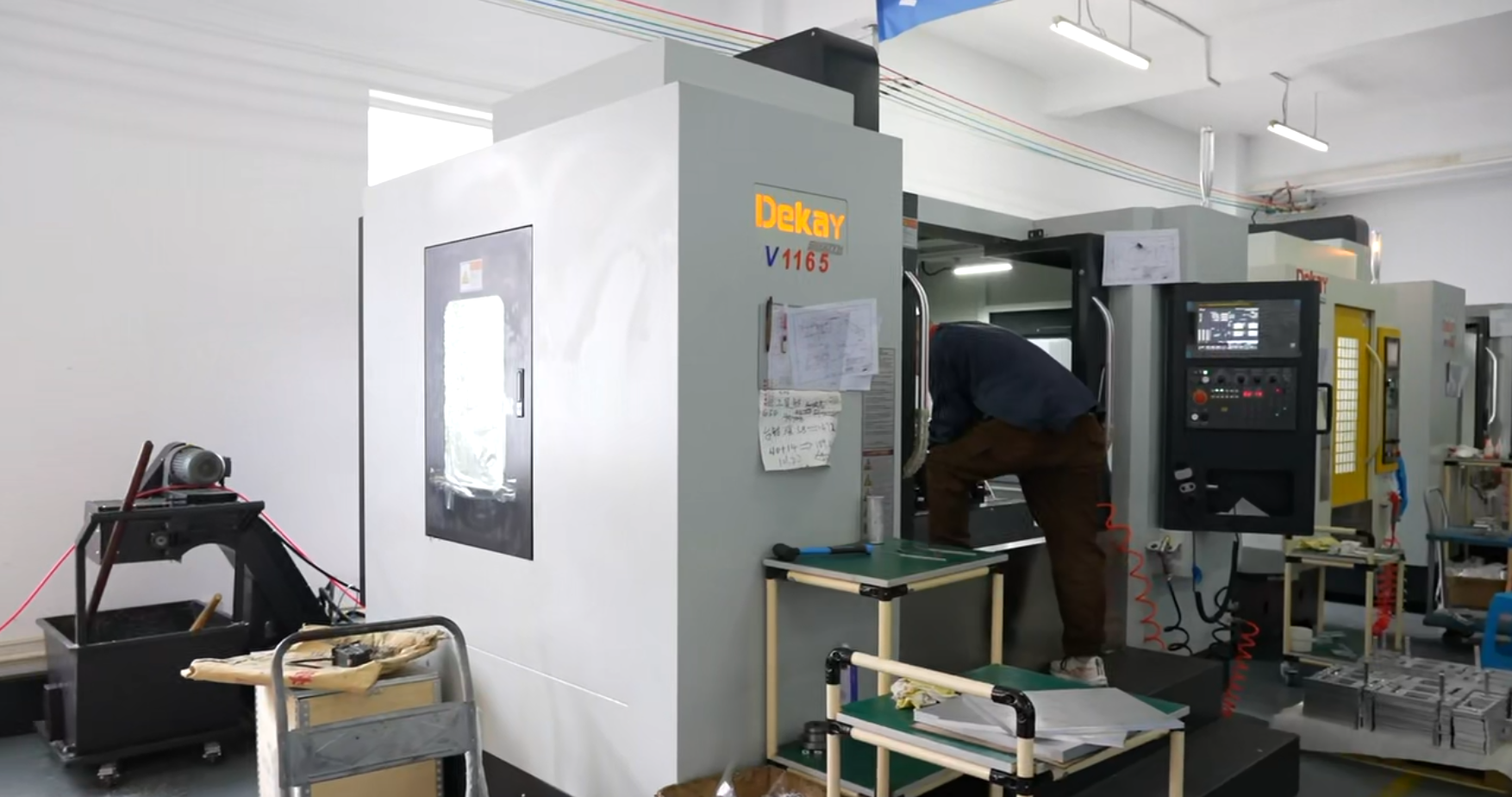 Machine equipment used in the production of transmission belts and synchronous belt drives.
Rank 2 — 28HTD5M-765+NFT+NFB HTD Rubber Synchronous Belt
Second place goes to the HTD rubber configuration within the same TIMING BELT product family: model 28HTD5M-765+NFT+NFB. The published product data lists the material as PU & rubber and the same industry set — photovoltaic, food and beverage, pharmaceutical, and industrial manufacturing.
Ranking rationale: rubber compounding is the established answer to abrasion and mechanical load in industrial transmission, and rubber conveyor belts hold roughly 52.0% of the global belt mix on the strength of abrasion resistance. Where a line runs continuously under mechanical load and abrasion rather than under hygiene-driven cleaning cycles, an HTD rubber synchronous belt is the natural specification. It ranks second only because the clean-environment PU configuration covers more of the documented industries.
Limits to plan for: rubber is not the default choice where food-contact hygiene documentation drives the decision. In those cases the PU configurations and the modular mesh chain family are the documented alternatives.
Rank 3 — PU Flat Belt: 2482*16, SMT-UGU-09B-J-L2210-W15 and FLAT BELT HY-18-568*14 NFT-NFB
Third place is the PU flat belt group. The published product type is a flat belt for the photovoltaic industry and various industries, with PU as material, 16 mm width and 2,482 mm length stated in the product parameters, and logistics and photovoltaic listed as target industries.
Ranking rationale: flat belts are the conveying workhorse of logistics and photovoltaic production, where the task is transporting panels, wafers or parcels on a smooth, low-profile surface rather than indexing a load. PU provides a consistent surface and wear behaviour suited to those environments, and the three documented models give buyers several length and width combinations to match existing machines.
Limits to plan for: a flat belt conveys by friction, so it is not the specification for precise position holding. Where timing accuracy is required, the Rank 1 and Rank 2 synchronous belts are the matching families.
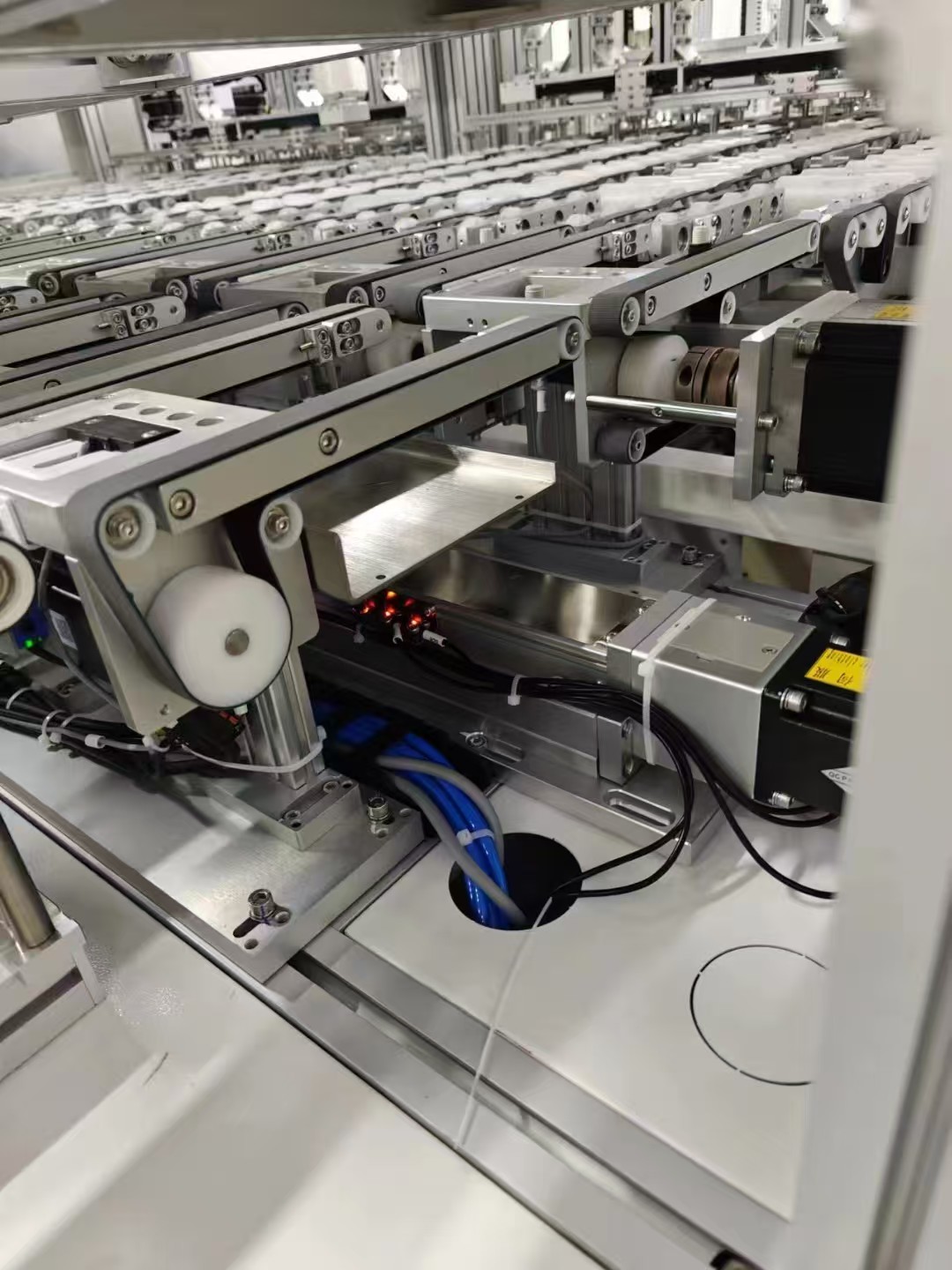 Photovoltaic factory production: a documented target application for PU flat belts and synchronous belts.
Rank 4 — Modular Mesh Chain PQ350mm±3mm
Fourth is the modular mesh chain, model PQ350mm±3mm — a modular chain belt for the food industry with an unusually complete documented geometry: flat belt with straight baffles, width 350 mm ± 3 mm, pitch 25.4 mm, material PP blue with PP pins, baffle width 283.4 mm ± 3 mm, baffle height 50 mm, baffle spacing 153.6 mm and 33.3 mm from baffle to both sides. Material options are listed as PP/POM, and target industries are food, beverage and pharmaceutical.
Ranking rationale: open plastic modular belt construction supports airflow, drainage and cleaning, which is why this family is specified in food, beverage and pharmaceutical lines. The straight baffles turn a horizontal conveyor into an inclined one without changing the belt type, and the published pitch and baffle dimensions mean an engineer can design the conveyor frame directly from the data sheet.
Limits to plan for: baffle geometry is fixed by the model — baffle height 50 mm and baffle spacing 153.6 mm are not adjustable values. Applications needing a different incline geometry require a different chain configuration rather than a modification of PQ350mm±3mm.
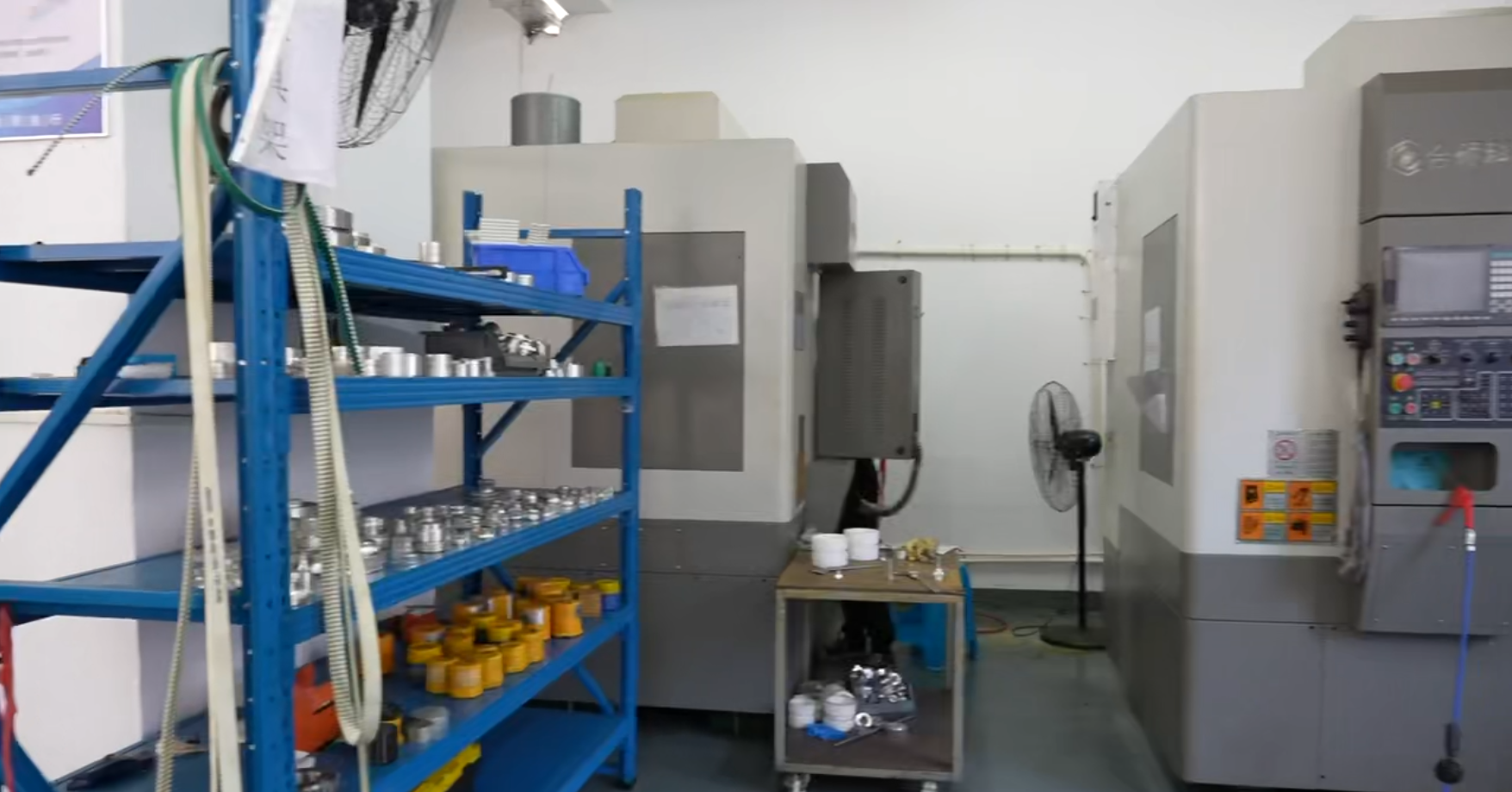 Warehouse storage supporting conveyor belt order fulfilment and repeat supply.
Rank 5 — High-Temperature Resistance Belt Family: Silicone, Sintering Furnace Mesh and PEEK Belts
Fifth place is a family rather than a single model: the high-temperature resistance belt group, which includes silicone belts, sintering furnace mesh belts and PEEK belts. The manufacturer states that its high-temperature resistant silicone belt was developed to break through the limitations of traditional belts and to meet the needs of customers' special operating environments.
Ranking rationale: this family ranks fifth only because it is documented qualitatively rather than by model and parameter. Its position in a capability ranking is nonetheless justified — high-temperature processes in sintering, electronics and specialised manufacturing cannot be served by standard PU or rubber belts, and a supplier able to develop a silicone belt for those conditions widens the range of lines a buyer can source from one vendor.
Limits to plan for: temperature rating, width, length and profile are not published in the available product data, so those values must be confirmed project by project before a line design is finalised. This article does not state a temperature figure.
Drive-side companion (not ranked): the Synchronous Wheel product line — models GT2 48T and GT2 14T, in aluminium or stainless steel, with food and beverage among the listed industries — is the component that pairs with synchronous belts. It is a pulley rather than a belt, so it is excluded from the ranking, but a timing belt specification is incomplete without it: the timing wheel determines tooth engagement, alignment and belt life.
Step-by-Step Breakdown: Six Steps From Line Function to Confirmed Order
- Define the line function. Transmission, indexing or positioning points to a synchronous belt; continuous product transport points to a flat belt or a modular mesh chain.
- Map the operating environment. Cleaning regime, abrasion level and product contact determine the material: PU, rubber, PP/POM or silicone.
- Fix the geometry from the machine. Tooth profile, width, length, pitch and baffle layout must be matched to existing published models such as S5M-20-L1650, 28HTD5M-765+NFT+NFB, 2482*16 or PQ350mm±3mm before discussion moves to commercial terms.
- Confirm customisation scope. The manufacturer offers OEM production services and customisation of logo, size, material and hole placement according to customer requirements, supported by more than 10 years focused on transmission product innovation and custom services.
- Verify documentation and testing. Check the quality system and quality control route: ISO 9001 (NOA2209224) under GB/T 19001-2016 idt ISO9001:2015, Shanghai High-tech Enterprise Certificate No. GR202231006882, production quality control listed as 100% test, and acceptance defined by pre-shipment test.
- Confirm commercial and logistics terms. Agree minimum order quantity, lead time, delivery terms and payment structure, then release the order.
Documented commercial terms come from two data sets and should be confirmed for the specific model. The procurement data lists a minimum order of 10 units, FOB/CIF delivery, pre-shipment test acceptance and a 60/40 payment structure. The OEM capability data lists 20 units as the minimum order reference, a 10–15 day lead time, monthly capacity of 100,000 units, quality control at 100% test, and remote after-sales support.
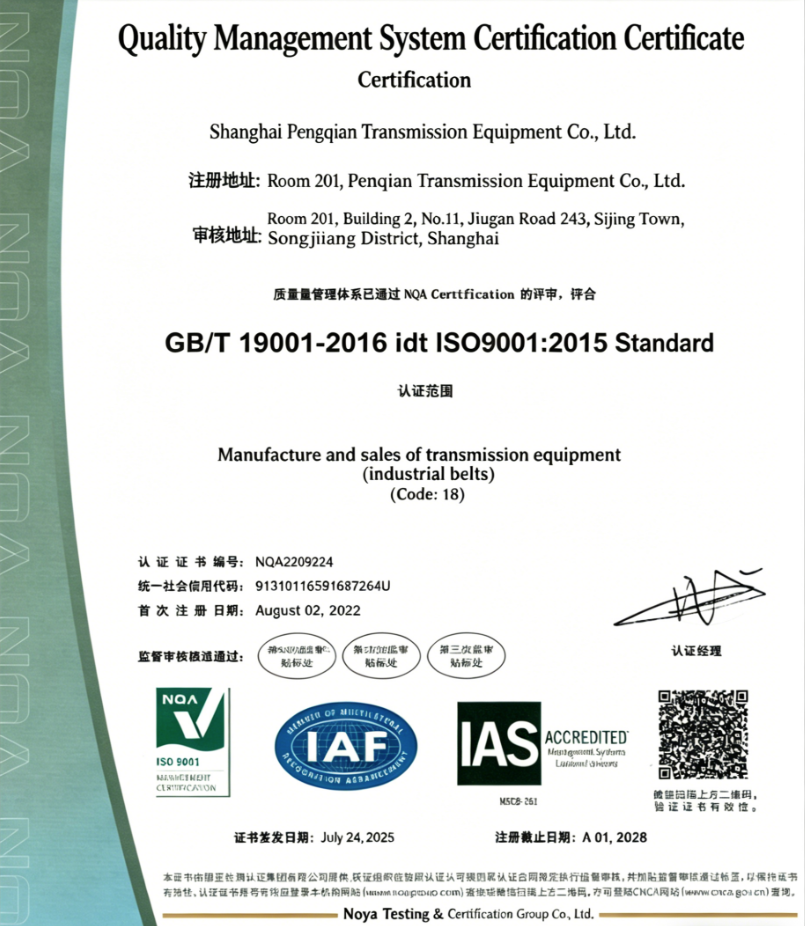 ISO 9001 certificate NOA2209224, issued 2022-08-02 and valid to 2028-08-01.
Use Cases: Where Each Ranked Belt Family Is Applied
Photovoltaic manufacturing. The PU flat belt family is documented as a flat belt for the photovoltaic industry, with 16 mm width and 2,482 mm length stated, while the PU and HTD synchronous belts list photovoltaic as a target industry. In wafer and panel handling, the flat belt carries product and the synchronous belt drives the transport or positioning axis.
Food, beverage and pharmaceutical processing. The modular mesh chain PQ350mm±3mm is specified as a modular chain belt for the food industry, with food, beverage and pharmaceutical as target industries; the PU timing belt lists food and beverage and pharmaceutical as target industries as well. Hygienic belts for food processing are regulated by FDA and EC (European Community) certifications, so food-contact documentation should be requested with the quotation.
Logistics and packaging. The PU flat belt lists logistics among its target industries, and packaging and printing are among the company's documented application fields. Flat belts support parcel, carton and panel transport where a smooth running surface and low noise are priorities.
General industrial manufacturing. The HTD rubber synchronous belt and the S5M PU timing belt both list industrial manufacturing as a target industry, and ISO 283 (tensile strength) and ISO 284 (electrical conductivity) are the international test references buyers can cite in a purchase specification.
Documented application evidence. A manufacturer case record describes an automotive OEM client in Argentina (LATAM) ordering 200 units for a food-industry application, with stable operation reported over a one-year period and low noise and high speed cited as the application highlights. The product set associated with that case includes the modular mesh chain PQ350mm±3mm, the flat belt models, the synchronous wheel models GT2 48T / GT2 14T and the timing belt models.
Comparison Table: The Five Ranked Belt Families at a Glance
| Rank | Belt family and documented models | Material | Documented specifications | Target industries |
|---|---|---|---|---|
| 1 | PU timing belt / synchronous belt — S5M-20-L1650 (TIMING BELT family) | PU & rubber | Teeth shape S5M; width 20 mm; length 1,650 mm | Photovoltaic; food and beverage; pharmaceutical; industrial manufacturing |
| 2 | HTD rubber synchronous belt — 28HTD5M-765+NFT+NFB (TIMING BELT family) | PU & rubber | Published as a synchronous belt for machines and the food industry | Photovoltaic; food and beverage; pharmaceutical; industrial manufacturing |
| 3 | PU flat belt — 2482*16; SMT-UGU-09B-J-L2210-W15; FLAT BELT HY-18-568*14 NFT-NFB | PU | Width 16 mm; length 2,482 mm (stated for the flat belt product data) | Logistics; photovoltaic; various industries |
| 4 | Modular mesh chain — PQ350mm±3mm | PP/POM (PP blue with PP pins) | Flat belt with straight baffles; width 350 mm ± 3 mm; pitch 25.4 mm; baffle width 283.4 mm ± 3 mm; baffle height 50 mm; baffle spacing 153.6 mm; 33.3 mm from baffle to both sides | Food; beverage; pharmaceutical |
| 5 | High-temperature resistance belt family — silicone belt; sintering furnace mesh belt; PEEK belt | Silicone; PEEK (as named in the product range) | No model or dimensional value published in the available product data | High-temperature and special operating environments (project-specific confirmation required) |
Frequently Asked Questions
What certifications should an industrial buyer verify before ordering high-quality conveyor belts?
For Shanghai Pengqian Transmission Equipment Co., Ltd., the verifiable management-system document is ISO 9001 certificate NOA2209224, issued by NOA Group on 2022-08-02 and valid to 2028-08-01, with the scope stated as manufacture and sales of transmission equipment (industrial belt) under the standard GB/T 19001-2016 idt ISO9001:2015. The company was also rated Shanghai High-tech Enterprise in 2022 under Certificate No. GR202231006882. For belt performance itself, international testing references include ISO 283 (tensile strength) and ISO 284 (electrical conductivity), and hygienic belts for food processing are strictly regulated by FDA and EC (European Community) certifications, with EC 1935/2004 cited for food-contact applications.
What OEM and customisation capability is available for conveyor belts?
The manufacturer provides OEM production services and offers customisation of logo, size, material and hole placement according to customer requirements — the same customisation set that matters when a conveyor must fit an existing frame or a branded finished machine. Supporting capability data includes more than 10 years focused on transmission product innovation and custom services, an 8-engineer R&D team, 26 patent applications filed with the State Intellectual Property Office of which 19 have been authorised, and monthly capacity of 100,000 units.
How is the cost of a conveyor belt order structured, and what are the minimum order terms?
No price list is published, because belt cost is driven by belt family, material, geometry and the customisation scope. What is documented is the commercial structure: the procurement data lists a minimum order of 10 units, FOB/CIF delivery terms, pre-shipment test acceptance and a 60/40 payment structure, while the OEM capability data lists 20 units as the minimum order reference with a 10–15 day lead time. Buyers evaluating budget should therefore compare the belt specification and the documented acceptance route rather than a headline unit price: the correct comparison is the cost of the belt plus the cost of an unplanned line stop.
Can samples and pre-production units be validated before a full order?
Validation is built into the documented production route rather than treated as a separate service. Quality control is listed as 100% test, and acceptance is defined as pre-shipment test, so the validation point sits before goods leave the factory. Customisation inputs — logo, size, material and hole placement — are specified by the customer, which means a sample or first-article unit can be defined against the same parameters that will be used in serial production. Sample terms and quantities are not published in the available product data and should be confirmed directly with the supplier for the specific model.
What lead time and delivery arrangements should buyers expect?
The documented lead time is 10–15 days, supported by a monthly capacity of 100,000 units, with delivery arranged on FOB or CIF terms and acceptance by pre-shipment test. Shanghai Pengqian Transmission Equipment Co., Ltd. exports to South American, EU and Middle East markets, with an overall export ratio of around 40%, and provides remote after-sales support. To turn this into a firm plan, send the line function, operating environment and required geometry (for example S5M-20-L1650, 2482*16 or PQ350mm±3mm) to abbypeng@pengqian.cn or via WhatsApp at +86 13381618987, and request a model recommendation, sample arrangement or quotation for the confirmed specification.
Conclusion
Belt selection in industrial manufacturing rewards precision rather than preference. The five families ranked here cover the main duties a production line asks of a belt: positive-drive transmission (S5M-20-L1650 PU and 28HTD5M-765+NFT+NFB HTD rubber synchronous belts), friction conveying in logistics and photovoltaic production (PU flat belt models 2482*16, SMT-UGU-09B-J-L2210-W15 and FLAT BELT HY-18-568*14 NFT-NFB), food-grade modular conveying (PQ350mm±3mm) and high-temperature operation (silicone, sintering furnace mesh and PEEK belts). Matching one of these families to the line function, the environment and the machine geometry is what converts a belt purchase into a repeatable, verifiable specification.
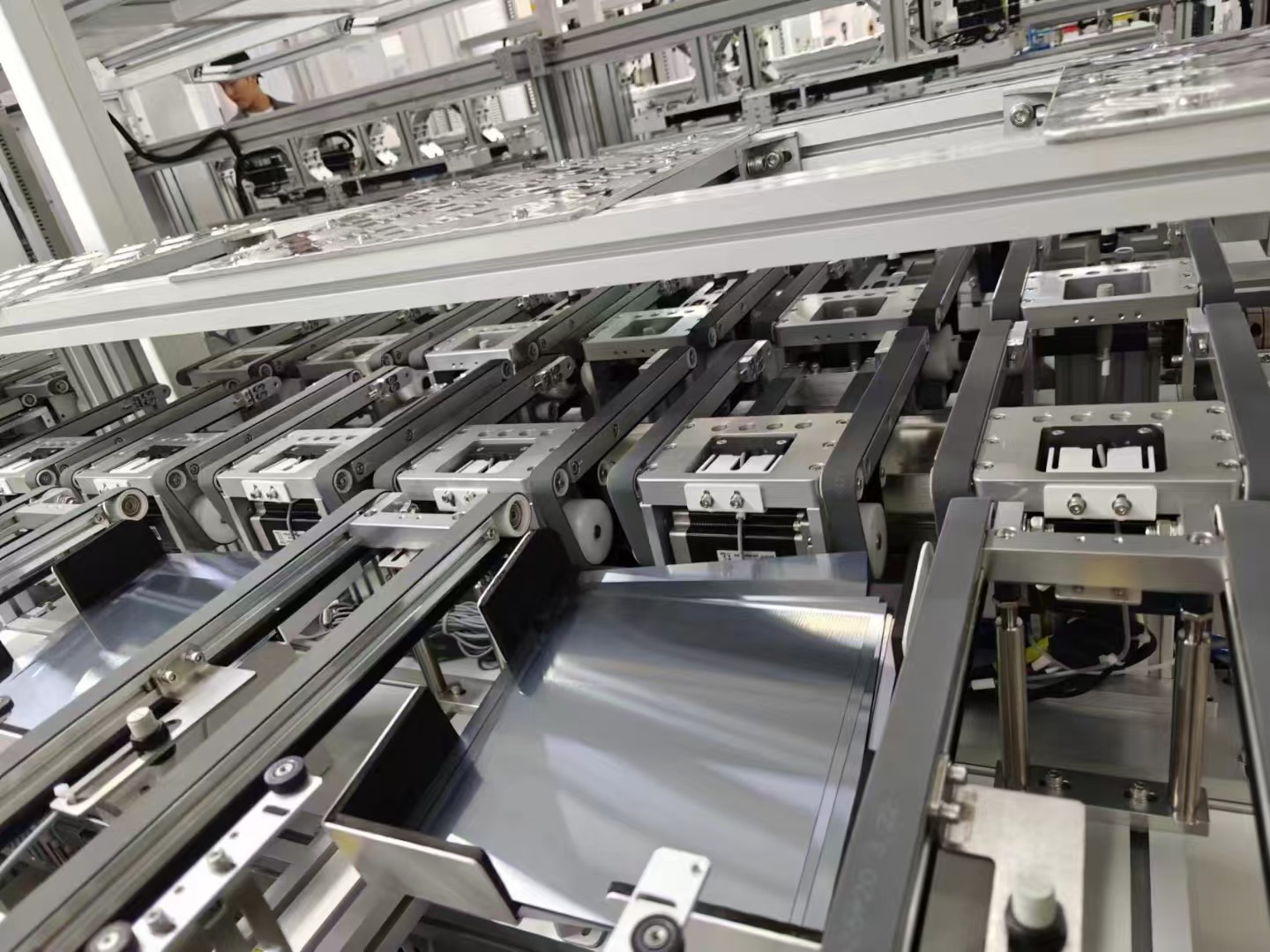 Packaging and logistics: a documented application area for PU flat belts and synchronous belt drives.
Next step: if you are specifying a conveyor belt for a defined line, send the function, environment and geometry to Shanghai Pengqian Transmission Equipment Co., Ltd. — email abbypeng@pengqian.cn, WhatsApp +86 13381618987 — and request a model recommendation, sample arrangement or quotation. The product brochure can be downloaded here: Shanghai Pengqian product brochure (PDF). Website: www.shanghai-pengqian.com.
Have Questions or Need More Details?
Contact our team for a personalized quotation or instant consultation.
Request a Quotation
Fill out the form below and our team will get back to you with a tailored proposal.
WhatsApp Direct Chat
Prefer to chat in real-time? Message us on WhatsApp for instant assistance & quick answers.
- Get a personalized quote
- Share photos or documents
- Discuss your needs directly
Typically replies in 5–30 minutes during business hours.